Simple flatbreads are unleavened or lightly leavened breads made from a short list of ingredients—usually flour, water, salt, and sometimes oil—that turn ordinary food into a flexible, communal meal. Their table-changing power comes from four attributes: speed, affordability, portability, and adaptability. A skillet flatbread can become a scoop for beans, a wrap for vegetables, a base for leftovers, or a crisp accompaniment to soup. That matters in a world where the Food and Agriculture Organization estimates that wheat supplies roughly one-fifth of global food calories, while the United Nations Environment Programme reports that households, food service, and retail generated about 1.05 billion tonnes of food waste in 2022. By using inexpensive staples and welcoming leftovers, flatbreads connect culinary history with practical goals such as lower meal costs, less waste, and more inclusive shared dining.
Serve simple flatbreads through their table-changing versatility
“Simple flatbread” is a culinary category rather than one universally fixed recipe. The Oxford Companion to Food describes flatbreads as breads that are relatively thin compared with risen loaves, while food historian Alan Davidson places them among the oldest and most widespread forms of bread. The defining attribute is functional simplicity: a flatbread needs no elaborate equipment, and many versions can be mixed, shaped, and cooked within minutes.
The category includes several hyponyms: roti and chapati from South Asia; tortilla from Mexico and Central America; pita and markook from the eastern Mediterranean; naan from South and Central Asia; injera from Ethiopia and Eritrea; lavash from the Caucasus and West Asia; and bannock-like griddle breads from parts of Europe and North America. These breads differ in flour, fermentation, thickness, and cooking method, but they share a useful design principle: they make a small amount of grain stretch across a meal.
Speed is the first practical attribute
A basic skillet flatbread can be prepared with flour, water, salt, and a little fat. Unlike a conventional yeast loaf, it may require no extended proofing, shaped loaf, or oven. This makes it valuable for weeknight cooking, emergency pantry meals, and communal gatherings where food must move quickly from kitchen to table.
The speed advantage is not merely convenient. The U.S. Department of Agriculture identifies time, cost, and cooking skills as important influences on food choices. A dough that takes roughly five minutes to mix and cooks in a hot pan can reduce the number of steps between raw ingredients and a complete meal. The supporting dish can be equally quick: scrambled eggs, lentils, sautéed greens, yogurt, tinned fish, or roasted vegetables can all become fillings or toppings.
Affordability turns a side dish into a meal structure
Flatbread is economical because its foundation is flour, and flour is concentrated, storable, and easy to portion. The final cost depends on the grain and toppings, but the bread itself can function as a low-cost carbohydrate base while higher-cost ingredients provide flavor in smaller amounts. Beans, seasonal vegetables, eggs, and dairy become more satisfying when paired with a warm, chewy wrapper.
This structure also supports different dietary patterns. Whole-wheat flour increases fiber compared with refined flour, while corn masa can contribute distinctive flavor and texture without wheat. The Harvard T.H. Chan School of Public Health recommends making whole grains about one-quarter of a balanced plate, alongside vegetables, fruit, and healthy protein. A flatbread meal can follow that pattern when the bread complements rather than displaces vegetables and legumes.
Portability makes eating more social and flexible
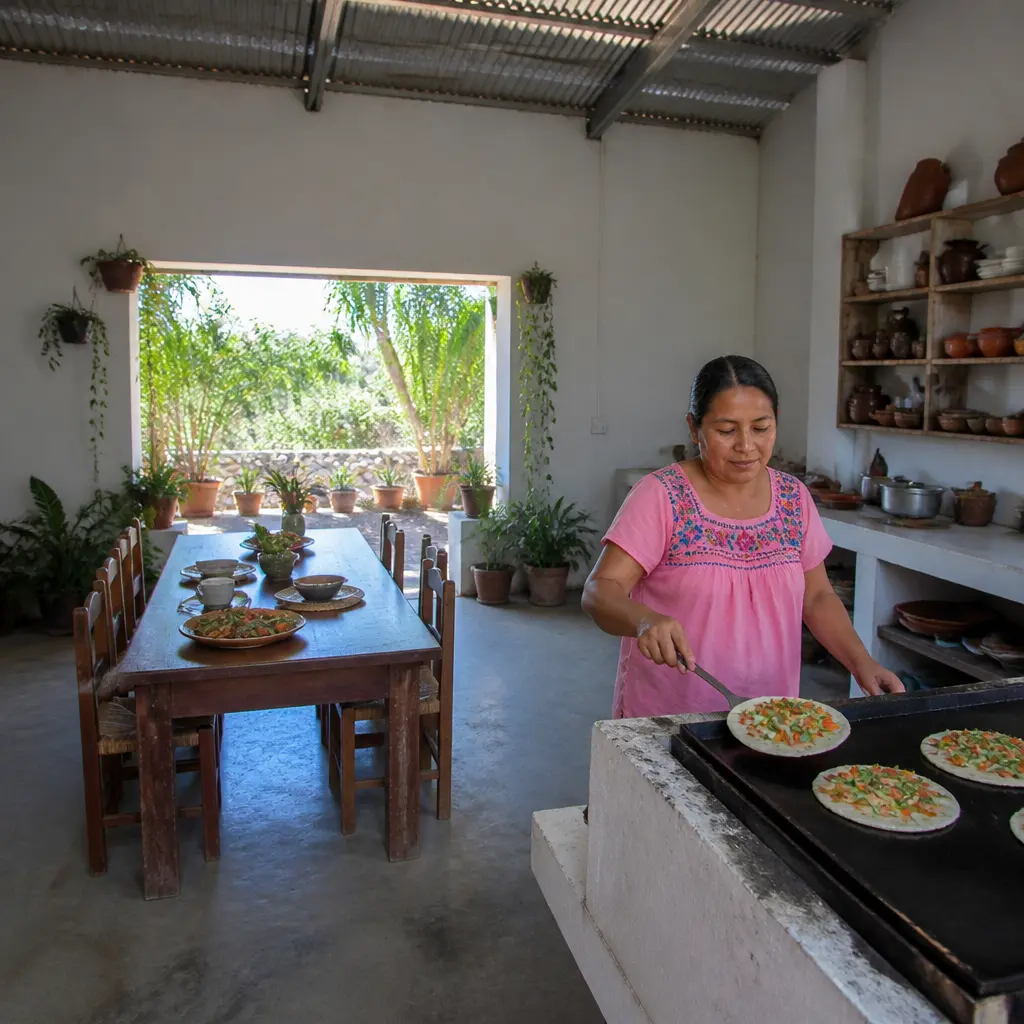
A flatbread is both food and utensil. It can wrap a filling, scoop a dip, separate portions, or create a handheld meal for work, school, travel, and outdoor eating. That portability changes the arrangement of the table: instead of serving one plated entrée, a host can place bread, spreads, vegetables, and proteins in the center and let diners assemble their own combinations.
This format has deep cultural precedent. Mexican tortillas support tacos and quesadillas; Indian rotis accompany vegetables and dals; Ethiopian injera acts as both platter and utensil; and Middle Eastern pita commonly carries falafel, meats, salads, and dips. These examples show that flatbread is not simply a neutral base. It can organize the social choreography of eating by encouraging passing, sharing, dipping, and customization.
Build simple flatbreads from a small set of adaptable techniques
The most useful flatbread techniques are mixing, resting, rolling or stretching, and cooking over direct heat. Each step can be adjusted to produce a different hyponym: a thin tortilla, a tender roti, a blistered pita, a crisp lavash, or a thicker yogurt flatbread. The method matters because texture determines how the bread functions at the table.
Mixing and resting create manageable dough
Mix flour and salt, add water gradually, and knead only until the dough becomes cohesive. A short rest allows flour proteins and starches to hydrate, making the dough easier to roll and less likely to spring back. Oil can increase tenderness, while yogurt can add acidity, moisture, and a softer bite.
- For a flexible everyday bread, use all-purpose or bread flour with water, salt, and a small amount of oil.
- For greater fiber, replace part of the refined flour with whole-wheat flour and allow a longer rest.
- For a naturally gluten-free option, use corn masa or a tested gluten-free flour blend, adjusting water because different grains absorb liquid differently.
Heat creates texture, flavor, and visual appeal
A preheated skillet or griddle is central to simple flatbread. High, even heat encourages browning and blistering before the interior dries out. A very thin dough becomes crisp quickly; a slightly thicker round remains foldable and works better as a wrap or scoop. Direct flame can add char, while an oiled pan creates a more tender, paratha-like surface.
The Maillard reaction, which produces browned aromas when heat acts on proteins and sugars, explains why a plain dough can taste complex after cooking. Color is also a practical cue: pale, floury patches may indicate insufficient heat, while blackened areas can signal scorching. A simple text-based comparison for a cooking guide would read: thin plus high heat equals crisp; medium thickness plus brief pan cooking equals flexible; layered dough plus fat equals flaky.
Toppings and fillings turn leftovers into deliberate meals
The flatbread should be treated as a platform for contrast: creamy with crisp, acidic with rich, fresh with roasted, and spicy with cooling. This approach makes leftovers feel composed rather than accidental. Yesterday’s roast vegetables can be paired with hummus; cooked chicken can meet herbs and yogurt; beans can be finished with pickled onions; and wilted greens can be folded with cheese or a fried egg.
- Choose a spread, such as hummus, labneh, mashed beans, pesto, or avocado.
- Add a substantial filling, such as lentils, eggs, tofu, chicken, fish, or roasted vegetables.
- Include freshness or acidity through herbs, cabbage, tomato, citrus, pickles, or salsa.
- Finish with texture: toasted seeds, nuts, crisp onions, or a small amount of cheese.
Use simple flatbreads to make the table more sustainable
Flatbreads can support sustainability, although no single bread automatically produces a low-impact meal. Their strongest advantage is flexibility: they can absorb small quantities of ingredients that might otherwise be ignored. The United Nations Environment Programme’s food-waste analysis emphasizes that waste occurs across households, food service, and retail, making household creativity one useful part of a broader solution.
Leftover integration reduces repetition and waste
A flatbread night can be designed as a “use-first” meal. Open the refrigerator, identify ingredients approaching the end of their useful life, and prepare them as fillings, toppings, or sauces. Small portions work especially well because flatbread distributes flavor across the entire bite.
Food and Agriculture Organization reporting distinguishes food loss, which occurs before retail, from food waste, which occurs at retail, food service, and household stages. Flatbread does not solve losses in farming or distribution, but it can help households use cooked grains, vegetables, sauces, and proteins more efficiently. Stale flatbread can also be toasted into chips, torn into salads, or simmered into soups depending on the tradition.
Portion control and shared service improve the meal experience
Because diners assemble their own wraps or scoops, a shared flatbread table can accommodate different appetites without requiring separate main dishes. Smaller breads encourage sampling, while larger rounds can serve as a centerpiece. The approach also makes allergens and dietary preferences easier to manage when fillings are served separately.
Salt deserves attention. The World Health Organization recommends that adults consume less than 2,000 milligrams of sodium per day, equivalent to less than 5 grams of salt. Since bread, cheese, sauces, pickles, and cured foods can all contribute sodium, a flatbread meal benefits from balancing salty components with unsalted beans, vegetables, herbs, citrus, and yogurt.
Make simple flatbreads a repeatable household practice
The best flatbread routine is not a single authentic recipe but a dependable formula. Keep flour or masa, salt, oil, and one or two shelf-stable fillings available. Then vary the meal with seasonal produce and sauces. This turns flatbread from an occasional novelty into a practical cooking system.
A reliable starter formula
For four to six small skillet flatbreads, combine approximately 250 grams of flour with about 150 grams of warm water, a half teaspoon of salt, and one tablespoon of oil. Mix, rest for 15 to 30 minutes, divide, roll thinly, and cook in a hot dry skillet until browned in spots and cooked through. Flour absorption varies, so add water gradually and judge the dough by feel: soft and pliable, not wet or crumbly.
A weekly table template
A practical weekly pattern is one dough, three flavor directions, and several leftover options. Try roasted vegetables with yogurt and herbs; spiced beans with salsa and cabbage; or scrambled eggs with greens and a sharp chutney. Labeling the meal by its components rather than by a rigid recipe keeps the method adaptable to budget, season, and dietary needs.
For a visual planning aid, a household chart could place flatbread types across the top—thin and crisp, soft and foldable, thick and chewy—and fillings down the side—beans, vegetables, eggs, meat, dairy, and pickles. The intersections show possible meals, making the versatility visible and helping cooks use what they already have.
Conclusion: simple flatbreads change the table by changing the possibilities
Simple flatbreads combine speed, affordability, portability, and adaptability in one modest food. Their hyponyms—tortillas, rotis, pitas, injera, lavash, naan, and many others—demonstrate how widely communities have used thin breads to stretch grains, carry fillings, and bring people together. The evidence around food costs, whole grains, sodium, and food waste gives the tradition contemporary relevance, while the techniques remain accessible to home cooks.
Start with one flour, one skillet, and one leftover-friendly filling. Then build a table around shared sauces, vegetables, legumes, and herbs. Further reading in the food-history and nutrition sources below can deepen the context, but the most useful research is often practical: cook one batch, observe what gets eaten, and adapt the next meal accordingly.
Sources: Oxford University Press, The Oxford Companion to Food, https://www.oxfordreference.com/display/10.1093/acref/9780192115799.001.0001/acref-9780192115799; Alan Davidson, The Oxford Companion to Food, Oxford University Press, https://global.oup.com/academic/product/the-oxford-companion-to-food-9780192115799; Food and Agriculture Organization of the United Nations, FAOSTAT Food Balances and Food Loss and Waste, https://www.fao.org/faostat/en/#data/FBS; United Nations Environment Programme, Food Waste Index Report 2024, https://www.unep.org/resources/publication/food-waste-index-report-2024; U.S. Department of Agriculture, Dietary Guidelines for Americans, 2020–2025, https://www.dietaryguidelines.gov/resources/2020-2025-dietary-guidelines-online-materials; Harvard T.H. Chan School of Public Health, Healthy Eating Plate, https://www.hsph.harvard.edu/nutritionsource/healthy-eating-plate/; World Health Organization, Sodium Reduction, https://www.who.int/news-room/fact-sheets/detail/sodium-reduction.