
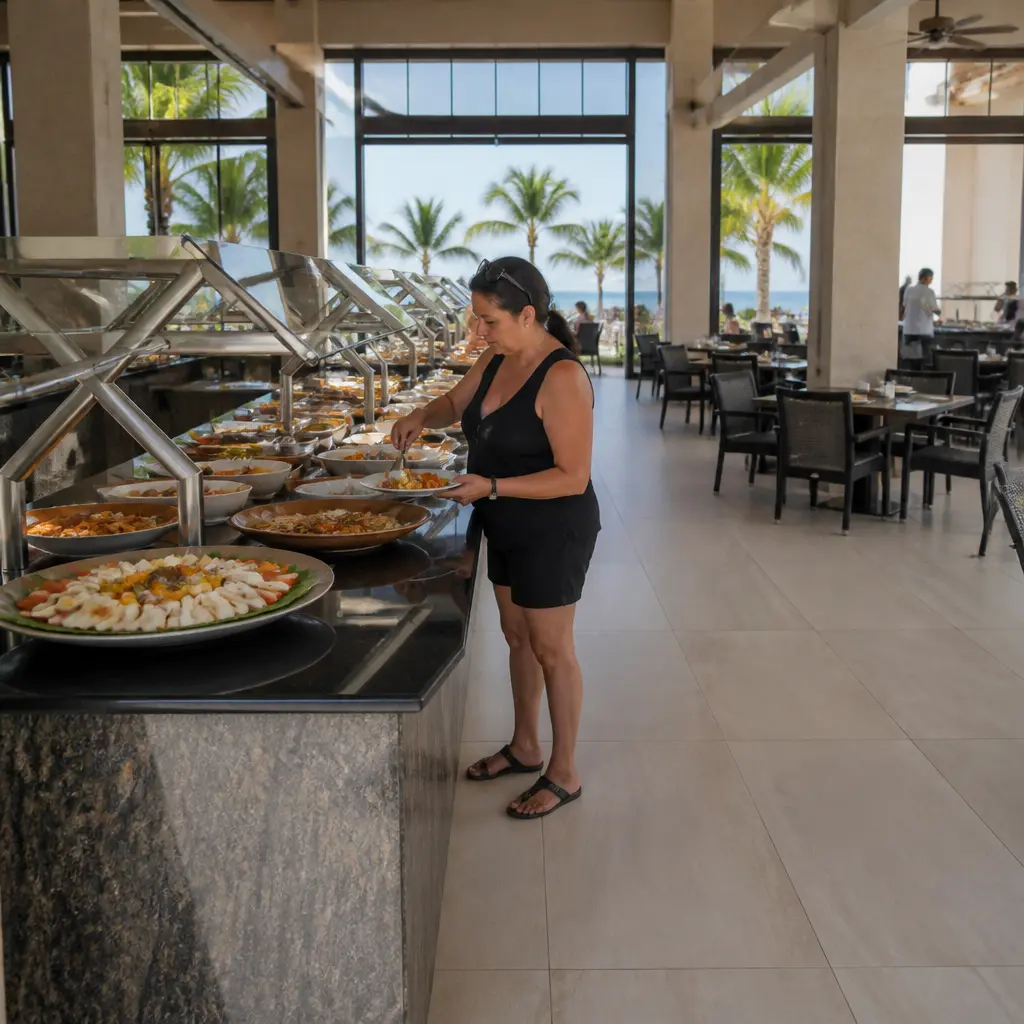
Buffet hospitality—an abundance-centered dining format—keeps guests returning because it combines perceived value, choice, freshness, social connection, and the freedom to create a meal at their own pace. Generous spreads also turn eating into an experience: guests can sample unfamiliar dishes, revisit favorites, accommodate different dietary preferences, and see visible evidence of effort and plenty. The National Restaurant Association reported that U.S. restaurant and foodservice sales were projected to exceed $1 trillion in 2024, making repeat visits especially important as operators compete for discretionary spending. The most successful spreads therefore do more than provide food; they build trust, reduce decision anxiety, and create memorable rituals.
Buffet Hospitality and Generous Spreads Create Perceived Value
A generous spread is a deliberately broad presentation of food in which abundance, variety, and visual accessibility are part of the guest experience. Merriam-Webster defines a buffet as a meal at which guests serve themselves from a variety of foods, while hospitality research generally treats perceived value as the customer’s judgment of what is received compared with what is sacrificed, including money, time, effort, and uncertainty. In that sense, a generous buffet spread is not simply a large quantity of food; it is a value signal.
The main hyponyms include all-you-can-eat buffets, hotel breakfast buffets, weekend brunches, seafood buffets, salad bars, carving stations, dessert buffets, and culturally themed spreads. Each format applies abundance differently. A hotel breakfast emphasizes convenience and predictability, while a seafood buffet emphasizes premium choice and perceived indulgence. A brunch spread blends sweet and savory options, extending the occasion from a quick meal into a social event.
Choice Density Reduces the Risk of a Disappointing Visit
Choice density is the number and range of meaningful options presented within one meal occasion. Guests return when a spread makes it easy for a group with different tastes to dine together: one person can choose grilled food, another can select vegetarian dishes, and a child can remain with familiar items. Variety is particularly valuable when diners are uncertain about what they want before arriving.
Research by Brian Wansink and colleagues on assortment and consumption helped popularize the idea that variety can increase sampling and consumption, although more choice is not always better. A spread works best when options are clearly grouped, replenished, and differentiated. Ten visibly distinct dishes can feel more generous than twenty nearly identical ones. A useful comparison chart for operators would plot “number of items” against “perceived difference,” because increasing the first without increasing the second can create clutter rather than value.
Abundance Makes the Price Feel Justified
Perceived price fairness is the judgment that the amount paid is reasonable for the benefits received. A spread supports that judgment through visible quantity, premium ingredients, live stations, and the opportunity to return for another portion. Guests do not need to consume the highest possible quantity to feel they received value; they need to believe the format gives them control over how much and what they eat.
This helps explain why buffets can remain attractive even when guests could purchase a cheaper individual entrée. The entrée offers one planned outcome, while the buffet offers optionality. The National Restaurant Association’s industry reporting also shows why value matters to operators: restaurants serve millions of customers daily, but consumers continue to compare dining occasions with grocery, takeaway, and at-home alternatives. A generous presentation makes the price easier to understand at a glance.
Freshness and Trust Turn a Large Spread into a Reliable Habit
Abundance attracts the first visit, but reliability earns the repeat visit. Guests come back when the food looks fresh, popular items are replenished, serving utensils are clean, and the dining room communicates control rather than disorder. The visible management of a buffet is therefore part of the product.
Replenishment Signals Freshness
Replenishment is the planned replacement of food in smaller, timely batches rather than leaving one large batch exposed for the entire service. Small-batch presentation helps maintain temperature, texture, color, and visual appeal. It also gives guests confidence that the food has not been sitting untouched for hours.
The U.S. Food and Drug Administration Food Code identifies 135 degrees Fahrenheit as the minimum hot-holding temperature for many time-and-temperature-control foods and 41 degrees Fahrenheit as the maximum cold-holding temperature. These are operational safety standards, not guarantees of quality, but they demonstrate why temperature monitoring and active replenishment matter. Guests may not see a temperature log, yet they notice its consequences in crisp salads, firm desserts, hot entrées, and the absence of dried edges.
Cleanliness Converts Plenty into Confidence
Buffet hygiene includes clean surfaces, orderly utensils, protected food, attentive staff, and prompt correction of spills. These details reduce perceived contamination risk and make the abundance feel cared for. The Centers for Disease Control and Prevention estimates that foodborne illness affects millions of Americans annually, so visible food-safety practices have an important emotional function as well as a regulatory one.
A case study can be seen in well-run hotel breakfast operations. The strongest properties place high-traffic items where staff can monitor them, use smaller service vessels during busy periods, label allergens, and refresh coffee, fruit, and hot dishes before they appear depleted. The result is a spread that feels continuously alive rather than merely stocked at opening.
Personalization and Autonomy Make Generous Spreads More Inclusive
Autonomy is the ability to control portion size, sequence, combinations, and pace. A buffet provides more autonomy than a fixed menu because guests can construct a meal that fits appetite, health goals, cultural preferences, and schedule. That control is a major reason families and mixed groups return.
Portion Freedom Supports Different Appetites
A guest who wants a light meal can select fruit, soup, or a small tasting plate, while another can build a substantial meal. This flexibility reduces the social friction of ordering. It also supports older diners, children, athletes, and guests who prefer several small portions over one large entrée.
The same principle applies to dietary needs, although choice alone is not enough. Clear labels, separate utensils, allergen communication, and staff knowledge determine whether a spread is genuinely inclusive. The FDA identifies nine major food allergens, including sesame, which became the ninth major allergen under U.S. law in 2023. A buffet that labels ingredients accurately can turn variety into practical reassurance.
Live Stations Add Control and Theater
Live stations are service points where food is cooked, carved, mixed, or finished to order. Omelet counters, noodle bars, dosa stations, grill counters, and dessert assembly areas combine customization with theater. Guests see transformation rather than only the final product, which increases perceived freshness and gives the meal a distinctive memory.
This format also solves a quality problem: delicate foods can be prepared closer to consumption instead of held for long periods. The station becomes a bridge between buffet efficiency and à la carte craftsmanship. When queues are managed well, the interaction with the cook can become a reason to return in its own right.
Social Ritual and Nostalgia Make the Spread Memorable
Commensality, the practice of eating together, gives generous spreads a social advantage. Guests move through the same visual landscape, compare selections, recommend dishes, and return to the table with different combinations. The meal accommodates conversation because no one must wait for every plate to arrive at once.
Shared Discovery Encourages Group Visits
A spread offers low-risk discovery. One diner can try a small portion of an unfamiliar dish and encourage others to sample it. This is particularly powerful in regional, cultural, and seasonal buffets, where the format functions as an introduction to a broader cuisine.
Hotels and resorts often use this effect in themed nights: regional curries, Mediterranean mezze, seafood evenings, or holiday brunches. The theme gives returning guests a reason to revisit while preserving the comfort of a familiar service format. In behavioral terms, the spread combines novelty with procedural familiarity.
Nostalgia Builds Emotional Loyalty
Nostalgia is the positive emotional response associated with remembered people, places, and rituals. Sunday brunch, celebratory dessert tables, hotel breakfasts on vacation, and holiday family meals can become repeatable traditions. Guests may return not because every dish is objectively superior, but because the setting reliably recreates a valued feeling.
This is why consistency should not be confused with sameness. A dependable signature dish can anchor the experience, while rotating seasonal items provide a fresh reason to visit. The best operators protect the familiar core and refresh the discovery layer.
Operational Generosity Determines Whether Guests Return
Operational generosity means making abundance easy to access, not merely displaying a large quantity of food. It includes adequate seating, sensible station layout, fast clearing, short queues, accessible pricing, and staff who notice when a favorite item is running low. These factors convert a promising spread into a frictionless experience.
- Place high-demand items in more than one location during peak periods.
- Use clear labels for ingredients, allergens, dietary categories, and serving times.
- Refresh food in smaller batches while removing tired or damaged portions promptly.
- Balance indulgent dishes with vegetables, fruit, grains, proteins, and lighter choices.
- Track return visits, item depletion rates, queue times, waste, and guest comments rather than relying only on sales.
Food waste is an important counterpoint to perceived generosity. The U.S. Environmental Protection Agency estimates that food waste accounts for a substantial share of material sent to landfills and incinerators. Smaller replenishment cycles, demand forecasting, donation partnerships where permitted, and careful menu engineering can protect both margins and environmental goals. A spread feels most generous when it is abundant without being careless.
Conclusion: Generous Spreads Earn Repeat Visits Through More Than Quantity
Buffet hospitality and generous spreads succeed because they unite perceived value, choice density, freshness, cleanliness, autonomy, social ritual, and nostalgia. All-you-can-eat formats make the price feel worthwhile; live stations make customization visible; accurate labels make variety safer; and reliable replenishment turns abundance into trust. The broader lesson is that guests return for a controlled sense of plenty: they want freedom and discovery without sacrificing quality or confidence.
Operators should evaluate the complete journey rather than counting dishes alone. Measure how quickly stations recover, whether guests can identify suitable foods, how often signature items sell out, and which moments generate compliments or complaints. Guests, meanwhile, can look for transparent labeling, active temperature control, clean utensils, and well-managed replenishment when choosing a buffet. Further reading in food-safety standards, hospitality design, consumer behavior, and food-waste reduction can help turn a generous spread into a sustainable, repeatable reason to return.
Sources: National Restaurant Association, 2024 State of the Restaurant Industry Report, https://restaurant.org/research-and-media/research/research-reports/state-of-the-restaurant-industry/; U.S. Food and Drug Administration, Food Code 2022, https://www.fda.gov/food/fda-food-code/food-code-2022; Centers for Disease Control and Prevention, Food Safety, https://www.cdc.gov/food-safety/; U.S. Environmental Protection Agency, Sustainable Management of Food, https://www.epa.gov/sustainable-management-food; U.S. Food and Drug Administration, Food Allergies, https://www.fda.gov/food/food-labeling-nutrition/food-allergies; Merriam-Webster, Buffet Definition, https://www.merriam-webster.com/dictionary/buffet; Wansink, Brian, and Koert van Ittersum, “Bottoms Up! The Influence of Elongation on Pouring and Consumption Volume,” Journal of Consumer Research, https://academic.oup.com/jcr/article/30/3/455/1790660