Mediterranean diet meal balance refers to combining vegetables, fruit, legumes, whole grains, nuts, olive oil, seafood, and other minimally processed foods in portions that support health without excessive calories. Mediterranean eating becomes a heavy meal when healthy ingredients are treated as unlimited, oil-rich foods are layered together, restaurant portions replace traditional serving sizes, or refined starches, cheese, alcohol, and desserts accumulate on the same plate. This matters because olive oil and nuts are nutrient-dense but calorie-dense, while a single tablespoon of olive oil supplies about 119 calories, according to the U.S. Department of Agriculture. The sections below explain how portion stacking, excess fats, oversized starches, salty accompaniments, and meal timing can undermine an otherwise healthful pattern.
Why Mediterranean Diet Meal Balance Prevents Heavy Meals
Mediterranean diet meal balance is the practical distribution of energy, food volume, and macronutrients across a meal while preserving the dietary pattern’s emphasis on plant foods and minimally processed ingredients. It is not a rigid calorie prescription. Rather, it means allowing vegetables, legumes, fruit, and whole grains to provide volume and fiber while using olive oil, nuts, cheese, and animal foods in measured amounts.
The traditional Mediterranean pattern is associated with a lower risk of cardiovascular disease, but the evidence concerns an overall eating pattern rather than unlimited quantities of every Mediterranean-labeled food. In the PREDIMED trial, published in the New England Journal of Medicine, more than 7,000 adults at elevated cardiovascular risk followed Mediterranean diets supplemented with extra-virgin olive oil or nuts, or a low-fat comparison diet. The Mediterranean groups experienced fewer major cardiovascular events, although the trial does not imply that larger portions produce greater benefits.
The main hyponyms of meal balance include portion balance, ingredient balance, energy-density balance, and meal-frequency balance. These categories overlap: a meal can contain excellent ingredients yet become heavy through excessive quantities, multiple concentrated fats, or a large combination of starches and sweets.
Portion balance
Portion balance means assigning the largest share of the plate to non-starchy vegetables, a moderate share to protein-rich foods or legumes, and a measured share to grains or starchy vegetables. A practical visual model is to fill about half the plate with vegetables, reserve roughly one-quarter for beans, fish, poultry, or another protein, and use the remaining quarter for whole grains or potatoes. This approach echoes plate-planning guidance from Harvard T.H. Chan School of Public Health, while allowing cultural flexibility.
A common mistake is confusing a healthful ingredient with a free food. A large bowl of lentils, several slices of whole-grain bread, a generous drizzle of oil, and a handful of nuts may all fit the Mediterranean pattern individually, but together they can create a meal substantially larger than intended.
Ingredient balance
Ingredient balance refers to limiting duplication among foods that serve a similar nutritional or caloric role. For example, a meal may need one principal fat source rather than olive oil, tahini, olives, feta, and nuts all at once. It may also need one principal starch rather than bread, rice, potatoes, and a grain-based dessert.
The Mediterranean pattern traditionally emphasizes variety, but variety does not require every food group at every sitting. Combining vegetables with chickpeas and a small amount of olive oil may be sufficient for one meal; adding cheese, bread, nuts, and dessert can turn the same meal into a high-energy occasion.
How Olive Oil and Healthy Fats Make Mediterranean Meals Heavy
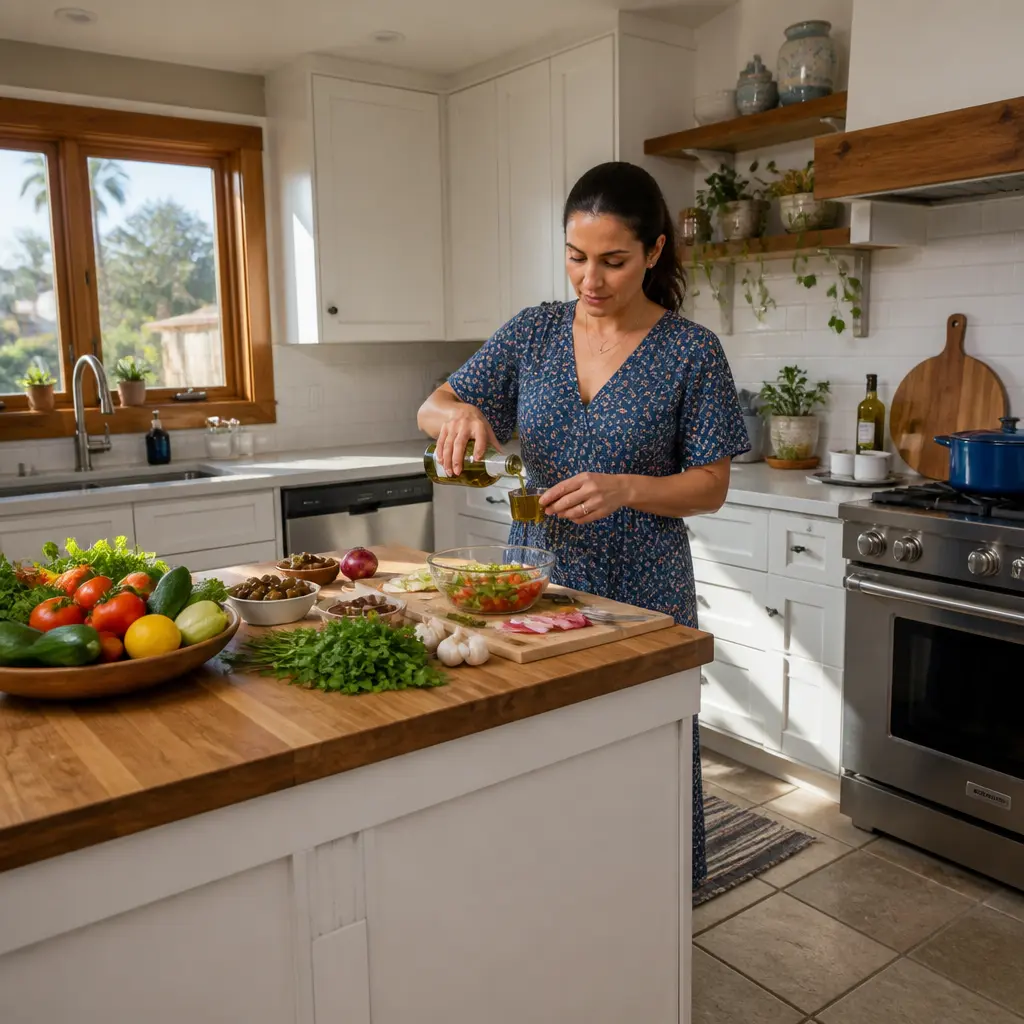
Olive-oil moderation is the practice of using extra-virgin olive oil as a flavorful fat rather than treating it as a weightless seasoning. Olive oil is rich in monounsaturated fat and is a central feature of Mediterranean cooking, but all fats provide about 9 calories per gram. The USDA FoodData Central database lists approximately 119 calories in one tablespoon of olive oil.
Free-pouring olive oil
Free-pouring occurs when oil is added directly from the bottle without measuring. Two or three tablespoons can add roughly 240 to 360 calories before the vegetables, grains, legumes, or protein are counted. A spoon, spray bottle, or small dipping dish makes the amount visible and helps preserve flavor without allowing the dressing to dominate the meal.
Stacking concentrated fats
Fat stacking happens when several energy-dense ingredients appear together: oil-based dressing, olives, avocado, nuts, seeds, hummus, and cheese. These foods can be nutritious, but a meal containing four or five concentrated fat sources may be heavier than a diner expects.
Nuts illustrate the issue clearly. They provide unsaturated fats, protein, fiber, vitamins, and minerals, yet a small one-ounce serving commonly supplies about 160 to 200 calories depending on the variety, according to USDA food-composition data. A measured small handful is different from repeatedly eating from a large serving bowl.
Misreading “extra virgin” as “low calorie”
Extra-virgin describes the oil’s production category and quality characteristics; it does not mean calorie-free or low-calorie. The International Olive Council identifies extra-virgin olive oil as a category meeting defined chemical and sensory standards. Those standards support quality and flavor, but they do not remove the energy density of oil.
How Starch and Protein Choices Turn Mediterranean Meals Heavy
Starch balance means choosing an appropriate amount of bread, pasta, rice, couscous, bulgur, or potatoes rather than assuming that whole-grain status makes portions unlimited. Whole grains generally provide more fiber and nutrients than refined grains, but they still contribute calories, especially when several starches are served together.
Serving bread with every course
Bread becomes a hidden source of excess when it arrives automatically with hummus, soup, salad, pasta, or a bean entrée. One modest slice may fit comfortably, but several slices dipped in oil or spreads can add the equivalent of another side dish. Removing the bread basket or serving one deliberate portion is a simple correction.
Combining multiple starches
A plate of roasted potatoes with rice, bread, and pasta contains several starch servings even if each portion looks small. A more balanced arrangement usually selects one principal starch and increases non-starchy vegetables for volume. This is especially relevant in restaurants, where a single entrée may include grains, bread, and a starchy side by default.
Overbuilding plant-protein meals
Legumes are a valuable Mediterranean staple and contribute protein, fiber, folate, potassium, and other nutrients. However, a large bean portion served with tahini, olive oil, bread, rice, and cheese can become dense. A lighter structure uses beans as the primary protein, adds abundant vegetables, and selects either bread or grains rather than both.
How Restaurant Portions and Add-Ons Distort Mediterranean Eating
Restaurant portion inflation is the mismatch between traditional Mediterranean serving patterns and modern commercial portions. The Mediterranean diet is often presented through small plates, shared vegetables, modest servings of fish, and leisurely meals, but restaurant versions may enlarge every component while adding sauces, bread, fried garnishes, and dessert.
Oversized mezze spreads
Mezze can become heavy when several dips and fried items are treated as individual appetizers rather than a shared spread. Hummus, baba ghanoush, muhammara, falafel, stuffed grape leaves, olives, pita, and cheese may produce considerable energy before the main course arrives.
A useful strategy is to choose two or three vegetable- or legume-based dishes, share them, and request sauces or oil on the side. Raw vegetables and salad can add volume without repeating the same concentrated ingredients.
Fried foods labeled Mediterranean
Frying changes the energy density of foods by adding fat during cooking. Falafel, calamari, eggplant, potatoes, and cheese can all appear in Mediterranean menus, but a fried preparation is not nutritionally interchangeable with a baked, grilled, steamed, or stewed version.
Sauces, cheese, and finishing ingredients
Small add-ons accumulate quickly. Feta, parmesan, creamy yogurt sauces, oily marinades, pesto, and sweet dressings can each be reasonable in moderation but collectively make a meal salty and energy-dense. Asking for sauces on the side and using cheese as a garnish rather than a second protein portion helps maintain balance.
How Meal Timing and Eating Speed Affect Mediterranean Meal Weight
Meal timing balance means allowing enough time to notice hunger and fullness rather than eating rapidly or grazing continuously. Traditional Mediterranean meals often include social eating and longer meals, but copying the food list without copying mindful pacing can lead to overeating.
Eating too quickly
Fast eating can delay recognition of fullness, making it easier to take second servings of bread, pasta, oil-rich dips, or dessert. Eating seated, placing utensils down between bites, and beginning with vegetables or salad can create a more deliberate sequence.
Grazing on healthy snacks
Nuts, olives, dried fruit, whole-grain crackers, and hummus are often nutritious snack options, but repeated unplanned portions can turn snacks into a second meal. The International Food Information Council has reported that consumers commonly eat for reasons beyond physical hunger, including stress, habit, and availability. Pre-portioning snacks and pairing them with fresh fruit or vegetables can reduce passive overeating.
Underestimating liquid calories
Wine and sweetened beverages can add energy without creating the same fullness as solid food. The Mediterranean pattern may include moderate wine consumption in some cultural settings, but the World Health Organization emphasizes that alcohol carries health risks and that less alcohol is safer. Water, sparkling water, or unsweetened tea better supports everyday hydration.
How to Build a Lighter Mediterranean Meal
A lighter Mediterranean meal keeps the pattern’s defining foods while reducing duplication and improving visual proportions. The goal is not to eliminate olive oil, grains, legumes, or cheese, but to give each ingredient a clear role.
- Start with two or more cups of non-starchy vegetables, such as tomatoes, leafy greens, peppers, zucchini, eggplant, or broccoli.
- Choose one main protein source, such as beans, lentils, fish, poultry, eggs, or yogurt.
- Select one principal starch, such as a measured serving of whole-grain bread, barley, brown rice, bulgur, pasta, or potatoes.
- Measure olive oil, nuts, seeds, olives, tahini, and cheese instead of combining generous portions of all of them.
- Use herbs, garlic, lemon, vinegar, spices, and a small amount of salt to build flavor.
- Serve fruit as the everyday dessert and reserve richer sweets for occasional portions.
For example, grilled fish with a large tomato-and-cucumber salad, a half-cup serving of beans or whole grains, and one measured tablespoon of olive oil is structurally different from a platter containing fried fish, potatoes, bread, hummus, feta, oily dressing, and baklava. Both may be marketed as Mediterranean, but the first better demonstrates portion and ingredient balance.
A simple self-audit can identify the source of heaviness: count the number of added fats, starches, fried components, sweet items, and alcoholic drinks in a meal. If several categories appear at once, reduce one or two rather than removing the vegetables, legumes, or whole grains that make the pattern nutritious.
Conclusion: Mediterranean Diet Meal Balance Protects the Pattern’s Benefits
Mediterranean eating becomes heavy mainly through portion imbalance, fat stacking, multiple starches, oversized restaurant servings, fried preparations, frequent grazing, and liquid calories. Olive oil, nuts, legumes, whole grains, fish, cheese, and fruit can all belong in a healthful pattern, but their benefits do not depend on unlimited portions.
The most useful principles are to make vegetables the foundation, choose one main starch and one main protein, measure concentrated fats, treat restaurant add-ons as optional, and eat slowly enough to recognize fullness. These practices preserve the cultural and nutritional identity of Mediterranean eating while making everyday meals lighter and more sustainable. Readers can compare their usual meals with a plate-based model, review USDA serving data, and consult a registered dietitian for individualized guidance, particularly when managing diabetes, cardiovascular disease, kidney disease, or weight-related concerns.
Sources: U.S. Department of Agriculture, FoodData Central, https://fdc.nal.usda.gov/; Estruch et al., “Primary Prevention of Cardiovascular Disease with a Mediterranean Diet Supplemented with Extra-Virgin Olive Oil or Nuts,” New England Journal of Medicine, https://www.nejm.org/doi/full/10.1056/NEJMoa1800389; Harvard T.H. Chan School of Public Health, The Nutrition Source: Healthy Eating Plate, https://www.hsph.harvard.edu/nutritionsource/healthy-eating-plate/; International Olive Council, Olive Oil Categories and Standards, https://www.internationaloliveoil.org/; World Health Organization, Alcohol, https://www.who.int/news-room/fact-sheets/detail/alcohol; International Food Information Council, Food and Health Survey, https://ific.org/research/food-health-survey/