
Restaurant Generosity: Generous Portions That Make Every Guest Feel Like Family
Generous portions are more than large servings: they are a hospitality practice that communicates welcome, value, and belonging. Restaurants create this feeling through abundant family-style platters, thoughtfully sized entrées, complimentary bread or sides, and attentive refills—while still managing cost, nutrition, and food waste. The approach matters in a restaurant industry that the National Restaurant Association estimated would exceed $1 trillion in U.S. sales in 2024, where perceived value and memorable experiences strongly influence repeat visits. The strongest version of generosity is not wasteful excess; it is an intentional balance of abundance, quality, cultural understanding, and practical portion control.
Hospitality + Generous Portions
The entity-attribute pairing “hospitality and generous portions” describes the relationship between a restaurant’s service promise and the amount, presentation, and sharing potential of the food it provides. In practical terms, generous portions are servings that make guests feel adequately fed and fairly treated while reinforcing the establishment’s identity. The National Restaurant Association identifies value as a central consideration in restaurant choice, and portion size is one visible component of that value judgment.
Generosity has several hyponyms, or more specific forms. These include family-style service, shareable plates, abundant side dishes, complimentary accompaniments, refillable beverages, celebratory desserts, and take-home portions. Each form expresses welcome differently. A large platter placed in the center of a table encourages conversation, while an extra serving of rice or bread can reassure guests that they will not leave hungry. A carefully packed leftover portion extends the experience beyond the dining room.
Portion Abundance as Perceived Value
Perceived value is the guest’s assessment of what was received compared with the price paid, including food quantity, quality, service, atmosphere, and convenience. A generous portion can strengthen that assessment, but size alone does not guarantee satisfaction. Research from Cornell University’s Food and Brand Lab has shown that visual and environmental cues influence how much people serve and consume, meaning presentation and context can make a portion feel more abundant without simply adding more food.
Restaurants can increase perceived abundance through height, color, garnishes, varied textures, and attractive serving vessels. A grain bowl layered with vegetables, herbs, and a protein may look more substantial than the same ingredients arranged flat. Family-style service also allows guests to select the amount they want, giving them control while preserving the visual impression of plenty.
Family-Style Portions and Shared Belonging
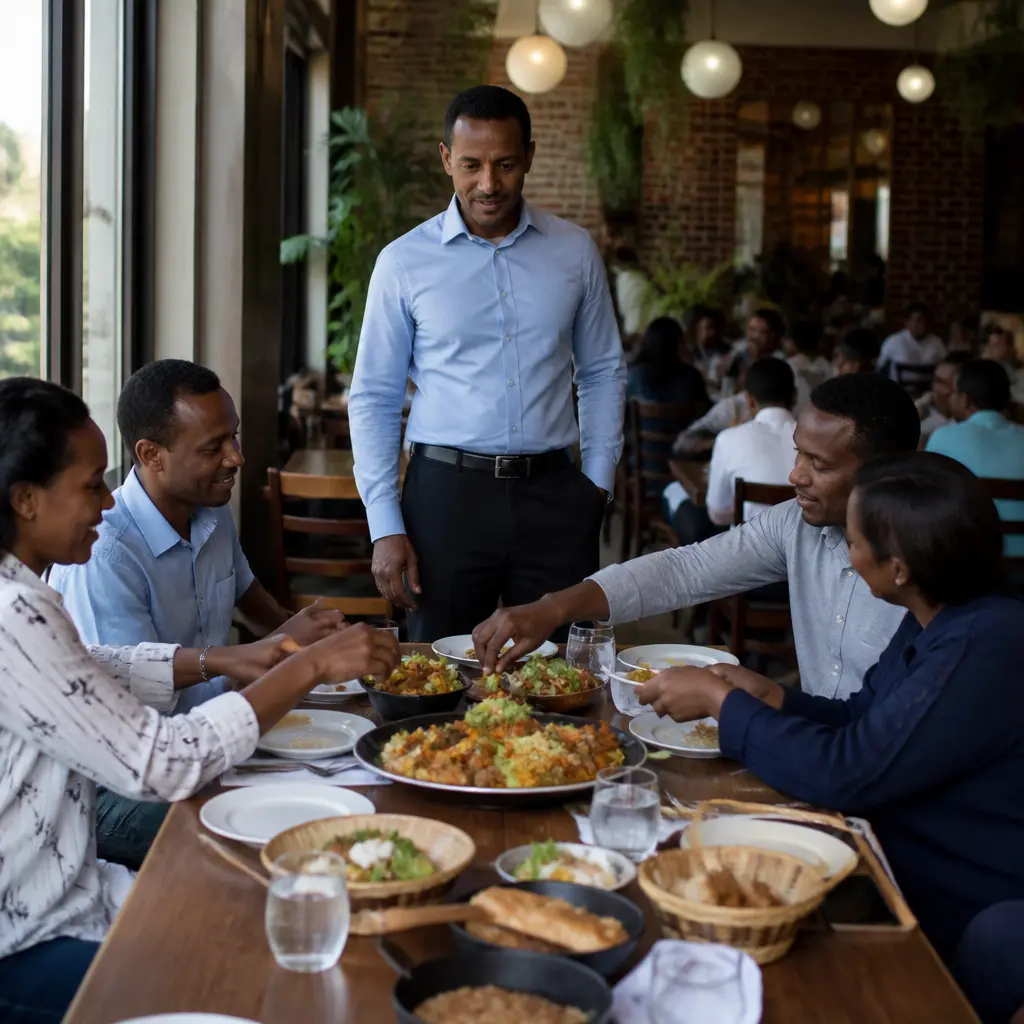
Family-style dining is a service model in which food is presented in shared dishes for guests to serve themselves. It is a particularly strong expression of culinary generosity because it transforms a meal from a series of individual transactions into a communal event. Shared platters invite guests to pass food, ask about unfamiliar dishes, accommodate different appetites, and participate in the meal’s rhythm.
The model is common across many food traditions, including Mediterranean mezze, Ethiopian communal platters, Indian thali service, Korean banchan, Chinese banquet dining, and Southern American table spreads. Restaurants should avoid treating these traditions as decorative themes; authentic hospitality requires explaining the food respectfully and allowing cultural practices to guide the service.
Generosity Without Over-serving
Responsible generosity means giving guests enough choice and food to feel cared for without encouraging unnecessary consumption. The U.S. Department of Agriculture estimates that 30% to 40% of the U.S. food supply is lost or wasted, making portion planning both an environmental and financial responsibility. Oversized servings that routinely return uneaten can undermine the very hospitality they are intended to create.
A better approach is flexible abundance. Restaurants can offer half portions, add-on sides, shared-size entrées, tasting portions, and clearly labeled take-home options. Servers can ask whether guests prefer individual or shared servings, and kitchens can track returned food to identify dishes that are consistently oversized. This allows generosity to respond to real demand rather than relying on one large default portion.
Service Practices + Generous Portions
Portion generosity becomes most meaningful when it is supported by service practices. Guests often remember the behavior surrounding a meal as much as the food itself. A server who notices an uneven share, offers an additional side without pressure, or packages leftovers carefully turns quantity into a personal gesture.
Welcoming First Portions
A welcoming first portion should be visually appealing, consistent, and appropriate to the dish. Consistency protects fairness: two guests ordering the same entrée should not receive dramatically different amounts. At the same time, standardized portions can be adapted for children, older adults, dietary needs, and guests who want to share.
Restaurants can establish generosity standards through recipe cards, calibrated utensils, portion scales, and photographic plating guides. These tools help control costs while making sure the guest-facing experience remains abundant. The goal is not to maximize grams of food; it is to maximize the guest’s sense of satisfaction and care.
Refills, Extras, and Thoughtful Additions
Small additions often communicate more warmth than an oversized entrée. Complimentary water, fresh bread, sauces served in sufficient quantities, an extra tortilla, or a second helping of vegetables can make a meal feel abundant. These gestures are especially effective when they are relevant to the cuisine and offered before the guest has to ask.
Refills should be attentive rather than automatic. Replacing a beverage or side only when needed prevents waste and respects the guest’s preferences. Staff training can emphasize observation and permission-based service: “Would you like more rice?” feels more considerate than placing an unwanted second portion on the table.
Take-Home Hospitality
Take-home packaging extends generous service beyond the restaurant. Safe, sturdy containers preserve food quality and signal that leftovers are valuable rather than embarrassing. Staff should provide packaging proactively when appropriate, separate sauces where possible, and explain reheating instructions for dishes that benefit from them.
This practice also supports waste reduction. The U.S. Environmental Protection Agency places preventing wasted food among the most preferred strategies in its food recovery hierarchy because prevention conserves the labor, water, energy, and land used to produce meals. A guest who can enjoy an unfinished entrée later receives additional value while the restaurant reduces avoidable disposal.
Restaurant Operations + Generous Portions
Generous portions must be designed into purchasing, preparation, pricing, and training. Without operational discipline, abundance can produce inconsistent plates, rising food costs, slower ticket times, and excess waste. With disciplined planning, it can become a recognizable brand attribute.
Menu Engineering for Abundance
Menu engineering is the analysis of item popularity and profitability to guide pricing and placement. Restaurants can use it to identify which generous dishes attract repeat orders, which sides are frequently shared, and which portions generate excessive leftovers. A profitable abundance strategy may pair a substantial entrée with lower-cost seasonal vegetables, grains, legumes, or house-made accompaniments rather than relying on expensive proteins alone.
Menus should also communicate portion expectations. Phrases such as “serves two,” “shareable,” “small plate,” and “family platter” help guests order accurately. Clear descriptions reduce disappointment and let diners choose abundance intentionally.
Measuring the Guest Experience
Restaurants can evaluate generous service through practical measures: entrée return rates, plate waste, guest satisfaction scores, repeat-visit frequency, add-on sales, take-home packaging use, and food-cost percentage. These indicators should be reviewed together. A high satisfaction score paired with excessive plate waste may show that portions are memorable but inefficient; low waste paired with complaints about value may indicate under-serving.
A useful operational dashboard can compare portion size, food cost, and guest feedback by menu item. Textual chart: the ideal pattern is high satisfaction, strong repeat ordering, stable food cost, and low avoidable waste. Managers can revisit recipes and serving sizes when one measure moves sharply away from the others.
Accessibility, Nutrition, and Inclusion
Generosity should include guests with different appetites, budgets, health needs, and dietary restrictions. Offering smaller portions at a proportionate price, vegetable-forward dishes, allergen-aware substitutions, and clearly described ingredients makes abundance more inclusive. The Centers for Disease Control and Prevention emphasizes the importance of balanced eating patterns that include vegetables, fruits, whole grains, and varied protein sources, so hospitality should not equate generosity exclusively with oversized amounts of meat, sugar, or fried food.
Inclusive abundance may mean providing more choice rather than more volume. A guest can feel equally welcomed by a carefully composed gluten-free meal, a generous plant-based platter, or a well-priced half portion that avoids unnecessary leftovers.
Guest Loyalty + Generous Portions
Generous portions contribute to loyalty when they are consistent, culturally respectful, and connected to genuine care. Guests are more likely to return when they believe a restaurant provides fair value and remembers their preferences. However, quantity cannot compensate indefinitely for poor flavor, long waits, unsafe food, or impersonal service.
The broader lesson is that abundance works best as a system of signals: a full-looking plate, a welcoming explanation, an optional refill, a fair price, and a thoughtful package for later. Together, these details make hospitality tangible. Restaurants that combine generous food with responsible operations can create the emotional impression of being welcomed into a family table without sacrificing sustainability or profitability.
Conclusion: Generosity + Responsible Hospitality
Generous portions become powerful when they express more than size. Hospitality and generous portions create perceived value; family-style and shareable servings build belonging; thoughtful refills and take-home packaging extend care; and menu engineering keeps abundance financially and environmentally responsible. Research and industry data from the National Restaurant Association, Cornell University, the USDA, the EPA, and the CDC all point toward a balanced approach in which guest satisfaction, resource stewardship, and operational consistency support one another.
Restaurant leaders can begin by auditing portion feedback, measuring plate waste, training servers to offer relevant extras, and adding flexible serving sizes to the menu. The most memorable generosity is not necessarily the biggest plate. It is the feeling that every guest has been seen, well fed, and invited to stay a little longer.
Sources: National Restaurant Association, 2024 State of the Restaurant Industry Report, https://restaurant.org/research-and-media/research/research-reports/state-of-the-restaurant-industry/; U.S. Department of Agriculture, Food Loss and Waste, https://www.usda.gov/foodlossandwaste; Cornell University Food and Brand Lab, Research on Portion Size and Eating Behavior, https://foodpsychology.cornell.edu/; U.S. Environmental Protection Agency, Sustainable Management of Food, https://www.epa.gov/sustainable-management-food; Centers for Disease Control and Prevention, About Healthy Eating, https://www.cdc.gov/healthy-weight-growth/food-nutrition/healthy-eating.html