
Moroccan tagine is both a slow-cooked dish and the distinctive earthenware vessel used to prepare it. Its fresh flavor comes from a deliberate balance of aromatic herbs, seasonal vegetables, citrus, olives, spices, and carefully browned meat or fish rather than from heat alone. Chicken with preserved lemon and olives, lamb with prunes, kefta with eggs, vegetable tagines, and coastal fish versions show how one cooking method supports many regional expressions. The subject remains culturally and economically relevant: Morocco’s Ministry of Tourism reported approximately 17.4 million tourist arrivals in 2024, and food experiences are a major way visitors encounter the country’s regional identity.
Moroccan Tagine Expresses Fresh Flavors Through Slow Cooking
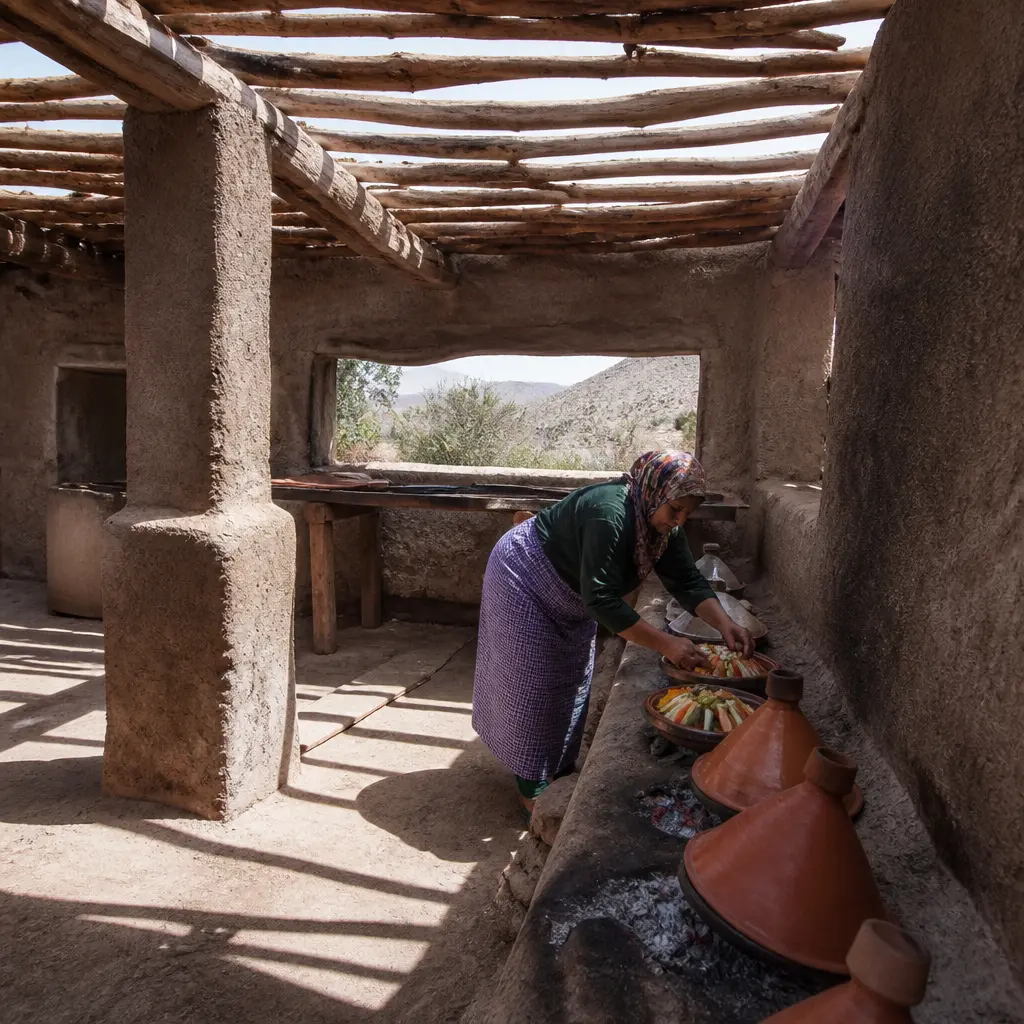
A Moroccan tagine is defined by the combination of a shallow, circular base and a tall, conical lid, together with the moist, layered cooking method associated with it. Encyclopaedia Britannica describes the tagine as a North African stew and the earthenware pot in which it is traditionally cooked. The lid traps steam released by meat, vegetables, and other ingredients; condensation then flows back into the base, allowing food to cook gently with relatively little added liquid.
This structure explains why “fresh” is a useful attribute of Moroccan tagine flavor. Freshness does not mean that every ingredient is uncooked or added at the last moment. It means that the dish preserves the identity of its ingredients through moderate heat, short ingredient lists, bright garnishes, and a cooking sequence that keeps herbs, vegetables, acidity, and natural juices distinct.
Tagine Vessel: A Condensation-Based Cooking System
The tagine vessel is a low-temperature, moisture-retaining cooking system. The broad base exposes ingredients to gentle heat, while the cone-shaped cover encourages vapor to rise, cool, and return to the stew. This circulation can tenderize tougher cuts and concentrate aromas without requiring the large quantity of stock used in some Western braises.
Traditional unglazed clay tagines can impart an earthy character, although many contemporary cooks use glazed ceramic, cast iron, or flame-safe modern cookware. The material matters less than controlled heat: sudden temperature changes can crack traditional pottery, so cooks often begin with low heat and use a diffuser when necessary.
Tagine Dish: Layered Stew Rather Than a Single Recipe
The tagine dish is a family of preparations built around a shared method, not one standardized formula. Common hyponyms include chicken tagine with preserved lemon and green olives, lamb or beef tagine with prunes and almonds, kefta tagine with eggs, vegetable tagine, and fish tagine from Atlantic and Mediterranean communities.
Ingredient placement often follows practical logic. Dense meat or root vegetables go near the base, softer vegetables sit above them, and delicate herbs or finishing ingredients are added later. The result is a stew in which the cooking liquid becomes a concentrated sauce while vegetables retain recognizable shapes and colors.
Moroccan Tagine Builds Fresh Flavor from Contrasts
Moroccan tagine flavor is best understood as a set of contrasts: sweet against salty, warm spice against fresh herb, richness against acidity, and softness against textural bite. These contrasts connect the vessel’s slow, moist cooking to the bright ingredients added before serving.
Preserved Lemon and Olives: Salty-Acidic Balance
Chicken tagine with preserved lemon and olives is one of the most recognizable examples. Preserved lemon contributes intense citrus aroma, salt, and acidity; olives add briny depth and a slight bitterness. Because preserved lemon rind is powerful, cooks commonly rinse it or use it sparingly, adding the rind toward the end so its perfume remains noticeable.
The dish demonstrates an important distinction between fresh flavor and raw flavor. The chicken may cook for an hour or longer, but the final citrus and olive notes prevent the sauce from tasting heavy. Fresh coriander, parsley, or a small amount of lemon juice can sharpen the finished dish without overwhelming the slow-cooked base.
Ras el Hanout, Cumin, and Saffron: Aromatic Warmth
Moroccan spices provide fragrance more than aggressive heat. Cumin, ginger, turmeric, black pepper, cinnamon, paprika, saffron, and coriander seed appear in different combinations. Ras el hanout, whose name is commonly translated as “top of the shop,” is a spice blend whose ingredients and proportions vary by producer and region; it should not be treated as a single universally fixed recipe.
Spices are often bloomed briefly in oil with onion before liquid is added. This disperses fat-soluble aromas and creates a savory foundation. The technique also helps explain why a tagine can taste complex even when it contains fewer than a dozen principal ingredients.
Herbs, Vegetables, and Seasonal Produce
Parsley and coriander are frequent aromatic anchors, while garlic, onion, tomato, carrot, potato, zucchini, pumpkin, artichoke, and green beans provide sweetness, color, and structure. Vegetable tagines show that the cooking method does not depend on meat: chickpeas, lentils, olives, preserved vegetables, and grains can supply protein and texture.
Seasonality is especially visible in vegetable versions. Spring artichokes, summer tomatoes, autumn squash, and winter root vegetables can all be arranged in the same conical vessel while producing noticeably different sauces. A useful accompanying chart would compare seasonal vegetables by cooking time, water content, and flavor contribution; dense potatoes require earlier placement, whereas zucchini and herbs need less exposure to heat.
Moroccan Tagine Reflects Regional Ingredients and Foodways
Moroccan tagine changes with geography. Inland and mountain cuisines often emphasize lamb, beef, dried fruits, nuts, and warming spices. Atlantic and Mediterranean areas make greater use of fish, seafood, tomatoes, chermoula, and preserved herbs. In oasis and agricultural regions, dates, almonds, vegetables, and locally available grains influence the balance of sweet and savory dishes.
Chermoula and Fish Tagine
Chermoula is a herb-and-spice marinade or sauce commonly associated with Moroccan fish cookery. Typical components include coriander, parsley, garlic, cumin, paprika, lemon, and oil, although recipes vary. Fish tagines use the paste to provide immediate freshness before cooking, while tomatoes, peppers, potatoes, or olives create a moist base.
Because fish cooks faster than lamb or beef, the timing changes. Vegetables may begin cooking first, with fish added later to avoid dryness. This is a clear example of how the tagine method adapts to ingredient biology rather than forcing every dish into the same schedule.
Sweet-and-Savory Lamb with Prunes
Lamb with prunes illustrates the sweet-savory tradition of Moroccan cooking. Slow cooking softens connective tissue and creates a rich sauce, while prunes, cinnamon, honey, sesame, or almonds add aromatic sweetness. The dish is not simply sugary: salt, ginger, pepper, and browned onion keep the flavor layered.
The combination also illustrates culinary preservation. Dried fruits extend seasonal availability, and nuts add texture and energy density. Morocco’s long history of trade across the Sahara and Mediterranean helped move spices, dried fruits, and cooking techniques between regions, although individual recipes remain strongly tied to household and local practice.
Moroccan Tagine Connects Tradition, Hospitality, and Tourism
Tagine is commonly served communally, with bread used to scoop up meat, vegetables, and sauce. This presentation turns the pot into both cookware and serving vessel. The practice supports hospitality because one dish can be placed at the center of a table and shared without elaborate individual plating.
Morocco’s tourism growth increases the international visibility of this food tradition. The Ministry of Tourism’s 2024 arrival figure of about 17.4 million visitors indicates the scale of the audience encountering Moroccan cuisine, while the United Nations World Tourism Organization has repeatedly identified gastronomy as an important part of cultural tourism. Restaurants and cooking schools therefore face a balance: preserve recognizable techniques while explaining that Moroccan tagine has many regional and family variations.
A Practical Method for Fresher Results
- Warm oil gently and soften sliced onion with garlic and whole or ground spices.
- Season and lightly brown meat when using it, or begin with firm vegetables for a plant-based version.
- Arrange ingredients in layers, placing dense items low and delicate items high.
- Add only a modest amount of water or stock, since the covered pot recycles moisture.
- Cook over low heat until the protein is tender or the vegetables are just soft.
- Finish with herbs, preserved lemon, olives, citrus, toasted nuts, or a fresh chermoula-style garnish.
Food safety remains essential. The United States Department of Agriculture recommends cooking poultry to an internal temperature of 165°F (74°C) and using a thermometer rather than relying only on appearance. Traditional technique and modern safety practice can work together: low, slow cooking develops flavor, while temperature checks confirm that food is safe to serve.
Conclusion: Moroccan Tagine Preserves Freshness Through Balance
Moroccan tagine is defined by the relationship between its conical vessel, slow condensation-based cooking, and adaptable regional recipes. Its fresh flavors emerge from contrasts: preserved lemon with olives, warm spices with herbs, tender meat with crisp garnishes, and rich sauces with seasonal vegetables. Chicken, lamb, kefta, fish, and vegetable tagines demonstrate that the form is broad rather than fixed.
Understanding these principles makes tagine more than a restaurant symbol. It reveals how cookware, climate, preservation, trade, seasonality, and hospitality shape a cuisine. Readers can explore Moroccan cookbooks, regional food histories, and responsible cooking classes, or begin at home with a vegetable tagine and carefully controlled heat. The most important lesson is to treat the tagine as a method of balance, allowing fresh ingredients to remain recognizable inside a deeply aromatic stew.
Sources: Encyclopaedia Britannica, “Tajine,” https://www.britannica.com/topic/tajine; Morocco Ministry of Tourism, “Tourism in Morocco: 2024 Results,” https://mtaess.gov.ma/; United Nations World Tourism Organization, Gastronomy Tourism, https://www.unwto.org/gastronomy-tourism; United States Department of Agriculture Food Safety and Inspection Service, “Safe Minimum Internal Temperature Chart,” https://www.fsis.usda.gov/food-safety/safe-food-handling-and-preparation/food-safety-basics/safe-temperature-chart; Oxford English Dictionary, “tagine,” https://www.oed.com/dictionary/tagine_n.