

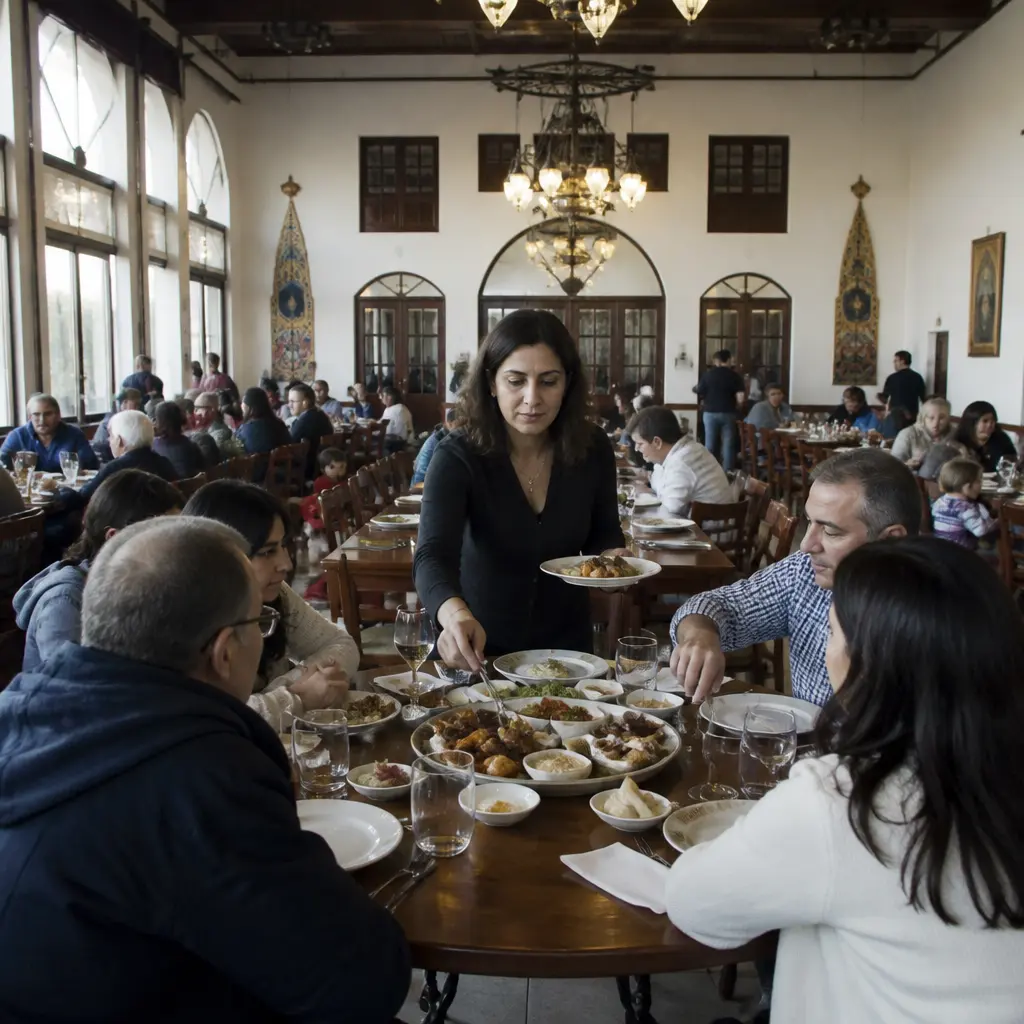
Middle Eastern meal formats are culturally shaped ways of organizing food, service, seating, and social interaction across countries such as Lebanon, Syria, Jordan, Palestine, Iraq, Iran, Türkiye, and the Gulf states. Their most recognizable forms include mezze, family-style platters, communal rice-and-meat dishes, bread-centered meals, and celebratory feasts. These formats make dining distinctive because they turn eating into a shared performance of hospitality: guests encounter many flavors at once, diners often serve one another, and the table becomes a setting for conversation and belonging. UNESCO’s inscription of the Mediterranean diet as Intangible Cultural Heritage emphasizes the importance of communal meals, hospitality, and the transmission of culinary knowledge, while the Food and Agriculture Organization identifies shared food practices as important parts of cultural identity and sustainable food traditions.
Communal Sharing and Middle Eastern Meal Formats
Communal sharing in Middle Eastern meal formats means arranging food so that several diners participate in the same selection of dishes rather than receiving entirely separate courses. Food historian Claudia Roden, whose work documents the cuisines of the Middle East and North Africa, presents the region’s cooking as a collection of local traditions united by hospitality, generous offering, and layered flavor. The pairing therefore describes both a service method and a social value.
The key characteristics are variety, abundance, flexibility, and interaction. Small plates may arrive simultaneously, bread can function as a utensil, and a central platter may be shared by the entire table. These features distinguish several related hyponyms: mezze dining, family-style dining, communal platter service, bread-centered meals, and feast-based hospitality. Although table manners vary by country, the common principle is that the meal is experienced collectively.
Mezze as a Multi-Dish Format
Mezze is a meal format built around numerous small savory dishes served together or in succession. Typical examples include hummus, baba ghanoush, tabbouleh, fattoush, stuffed grape leaves, kibbeh, labneh, pickles, olives, and toasted or fresh bread. The word is commonly connected with the idea of tasting or sampling, making mezze less a single recipe than a progression of shared tastes.
Mezze is distinctive because it expands the meal horizontally rather than vertically. Instead of one main course dominating the table, diners move among textures and temperatures: creamy dips, crisp salads, fried pastries, grilled vegetables, and preserved foods. The Smithsonian and culinary historians frequently describe mezze as a format that reflects the region’s trade routes and agricultural diversity, where grains, legumes, olive oil, herbs, yogurt, and seasonal vegetables support many combinations.
In restaurants, mezze also encourages group ordering. A table of four might order six to ten plates, allowing guests to compare flavors and share preferences. This creates a participatory rhythm that is different from a conventional individually plated appetizer and entrée sequence.
Family-Style Platters and Central Service
Family-style dining places substantial dishes in the middle of the table for diners to portion themselves. Common examples include grilled meats, roasted chicken, stuffed vegetables, stews, rice dishes, and platters of fish. The format can be informal in a home or highly arranged in a restaurant, but its defining feature is that the table, rather than the individual plate, is the center of service.
This arrangement supports hospitality because hosts can demonstrate generosity through the quantity and range of food offered. It also accommodates different appetites and dietary preferences. A guest may choose more salad, rice, vegetables, or bread without requiring a change to the whole meal. Research on hospitality in the Arab world, including work published by the International Journal of Gastronomy and Food Science, frequently links offering food with respect, welcome, and social obligation.
Bread-Centered Eating and Middle Eastern Meal Formats
Bread-centered eating uses flatbread as a food, utensil, and carrier. Pita, khubz, markook, lavash, and other regional breads may scoop dips, wrap meat, absorb sauces, or accompany nearly every savory dish. This format reflects the importance of wheat and grain cultivation across the Fertile Crescent and surrounding regions.
Bread as Utensil and Social Connector
In many settings, diners tear bread with the right hand and use it to gather food from a shared dish. The practice is not uniform: some households use forks, spoons, or individual plates, and religious and regional customs influence etiquette. Nevertheless, bread creates a physical connection between diners and food. It also reduces dependence on cutlery and makes dips, stews, and grilled foods easier to share.
The cultural importance of bread is reinforced by its economic importance. The Food and Agriculture Organization identifies cereals as foundational foods in West Asian and North African food systems, while national food-consumption surveys across the region commonly show bread and other grain products among major sources of daily energy. A useful visual for readers would be a regional food-system chart comparing bread, rice, legumes, dairy, and vegetables as components of everyday meals.
Dips, Pickles, and Accompaniments
Dips and accompaniments are dishes designed to be combined with bread or placed alongside larger foods. Hummus, labneh, muhammara, toum, pickled turnips, olives, and seasonal salads provide contrast in acidity, richness, spice, and texture. Their role is larger than that of a garnish: they help construct each bite and allow diners to customize the meal.
This modular structure explains why Middle Eastern dining can feel abundant even when many individual dishes use economical ingredients. Chickpeas, yogurt, eggplant, grains, herbs, and vegetables can be transformed through roasting, fermenting, blending, drying, and pickling. The result is culinary variety built from a relatively durable pantry, a characteristic noted by the World Health Organization in its descriptions of Mediterranean-style dietary patterns.
Feasting and Middle Eastern Meal Formats
Feasting is an expanded meal format associated with religious holidays, weddings, family milestones, and welcoming guests. It may include multiple courses, whole roasted animals, elaborate rice dishes, stuffed vegetables, sweets, coffee, and tea. Unlike everyday family-style dining, a feast communicates exceptional generosity and marks an important event.
Mansaf, Maqluba, and Other Signature Platters
Mansaf, strongly associated with Jordan, combines meat, rice or bulgur, and a fermented dried-yogurt sauce known as jameed. It is traditionally presented on a large platter and is connected with Jordanian hospitality and major gatherings. Maqluba, found in Palestinian, Jordanian, Syrian, and neighboring cuisines, is a layered rice, vegetable, and meat dish turned upside down before serving. Its presentation creates a moment of theater when the pot is inverted and the dish is revealed.
Other examples include Saudi kabsa, Iraqi masgouf, Iranian polo dishes, Lebanese sayadieh, and Gulf-style mixed grills. These foods are not interchangeable, and their histories should not be collapsed into a single “Middle Eastern” tradition. Their shared relevance is structural: many are designed for presentation, portioning, and collective appreciation.
Hospitality, Ritual, and Occasion
Hospitality is the social principle that connects everyday sharing with formal feasting. Guests may be offered coffee, tea, dates, sweets, or a full meal depending on the setting. UNESCO’s documentation of the Mediterranean diet identifies commensality—the practice of eating together—as a central cultural element, alongside seasonal foods, local knowledge, and family transmission.
Religious calendars also influence meal formats. During Ramadan, the evening iftar meal often begins with dates and water before expanding into soups, salads, rice, meat, pastries, and drinks, although practices differ by household and country. Eid celebrations may feature richer dishes and sweets. These occasions show how a meal format can organize time, memory, generosity, and religious observance at once.
Modern Restaurants and Middle Eastern Meal Formats
Contemporary restaurants adapt traditional formats to urban lifestyles, international service standards, and changing dietary needs. A restaurant may offer a mezze tasting menu, individual portions inspired by communal dishes, vegetarian platters, or a shared grill board. This flexibility helps Middle Eastern food travel across borders without abandoning its emphasis on variety and interaction.
The global restaurant market also gives these formats economic relevance. The National Restaurant Association has consistently reported that consumers value experiences, customization, and social occasions when dining away from home. Shared Middle Eastern formats meet all three preferences: diners can select several dishes, adjust portions, and treat the meal as a group event. Restaurants can make the experience more accessible by explaining allergens, labeling halal options, offering serving utensils, and clarifying whether a dish is intended for one person or several.
Conclusion: Why Middle Eastern Meal Formats Matter
Middle Eastern meal formats make dining special by joining food with social design. Mezze creates variety and conversation; family-style platters express generosity; bread-centered eating connects diners to shared dishes; and feasts such as mansaf and maqluba turn important occasions into memorable public rituals. The evidence from UNESCO, the Food and Agriculture Organization, culinary historians, and restaurant-industry research shows that communal eating is not a decorative feature but a meaningful part of cultural identity, hospitality, and consumer experience.
Readers who want to explore these traditions should compare regional cuisines rather than treating the Middle East as a single culinary category. A practical next step is to order a mixed mezze selection, ask how dishes are traditionally shared, and learn the histories of the foods on the table. Doing so supports more accurate, respectful, and rewarding engagement with Middle Eastern dining.
Sources: UNESCO, “Mediterranean Diet,” https://ich.unesco.org/en/RL/mediterranean-diet-00884; Food and Agriculture Organization of the United Nations, “Globally Important Agricultural Heritage Systems,” https://www.fao.org/giahs/en/; Claudia Roden, The New Book of Middle Eastern Food, https://www.penguinrandomhouse.com/books/; Smithsonian Institution, “Food and Culture,” https://www.si.edu/spotlight/food; World Health Organization, “Healthy Diet,” https://www.who.int/news-room/fact-sheets/detail/healthy-diet; National Restaurant Association, “State of the Restaurant Industry Report,” https://restaurant.org/research-and-media/research/research-reports/state-of-the-restaurant-industry/