
Mediterranean cuisine is a family of regional food traditions shaped by olive oil, grains, legumes, vegetables, seafood, herbs, and centuries of cultural exchange. Its defining dishes range from Spain’s paella and gazpacho to Italy’s pasta, Greece’s moussaka, Türkiye’s kebabs, the Levant’s hummus and mezze, and North Africa’s couscous and tagines. The United Nations Educational, Scientific and Cultural Organization (UNESCO) recognizes the Mediterranean diet as intangible cultural heritage, emphasizing that it is not simply a menu but a shared system of farming, preparation, hospitality, and communal eating. This article maps the classic dishes associated with the Mediterranean’s principal culinary regions, explains how geography and history shaped them, and shows why this food tradition remains relevant to public health, cultural identity, and sustainable agriculture.
Regional Identity Defines Mediterranean Cuisine
The entity-attribute pairing “Mediterranean cuisine—regional identity” describes the relationship between a broad culinary world and the local ingredients, techniques, histories, and social customs that distinguish one Mediterranean region from another. UNESCO defines the Mediterranean diet as a set of skills, knowledge, rituals, symbols, and traditions surrounding crops, harvesting, fishing, animal husbandry, preservation, cooking, and the sharing of food. This definition explains why Mediterranean cuisine cannot be reduced to olive oil and salad: its essential attribute is regional variation connected by a common cultural framework.
The Mediterranean basin includes European, Asian, and African shores, and its cuisines reflect Phoenician trade, Greek and Roman agriculture, Arab innovations, Ottoman administration, Jewish foodways, and later exchanges through migration and empire. The United Nations Environment Programme Mediterranean Action Plan describes the region as comprising 21 countries and the European Union, with hundreds of millions of residents and a highly interconnected coastal economy. A textual comparison chart would show the pattern clearly: wheat and olive oil dominate much of the western and northern basin; rice, bulgur, and yogurt become more prominent toward the eastern Mediterranean; while semolina, preserved lemons, dates, and spice blends are especially important in North Africa.
Shared Foundations: Olive Oil, Grains, Legumes, and Communal Eating
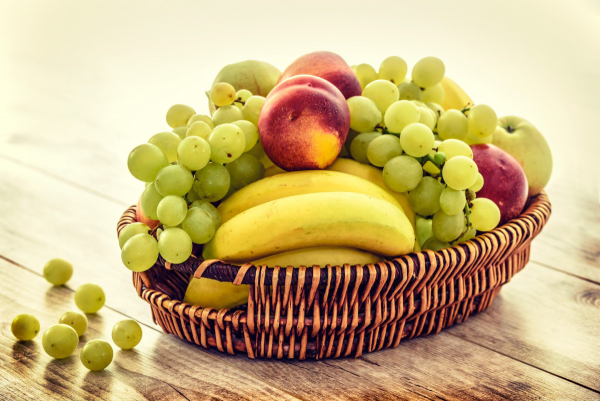
The shared foundation of Mediterranean food is a plant-forward pattern built around cereals, pulses, vegetables, fruit, nuts, herbs, and moderate quantities of fish, dairy, and meat. The Food and Agriculture Organization of the United Nations identifies these food systems as closely linked to biodiversity, seasonal production, and traditional knowledge. Olive oil is both a cooking fat and a cultural marker, while wheat appears as bread, pasta, couscous, bulgur, and pastry.
The Mediterranean diet also has measurable health relevance. A landmark randomized clinical trial published in the New England Journal of Medicine found that participants assigned to a Mediterranean diet supplemented with extra-virgin olive oil or nuts experienced fewer major cardiovascular events than those following a reduced-fat control diet. The result does not mean that every traditional dish is automatically healthy; fried foods, refined sweets, and heavily salted cured products remain common in many areas. It does show why the overall dietary pattern, rather than a single ingredient, matters.
Western Mediterranean Dishes Express Maritime and Agricultural Exchange
The western Mediterranean includes Spain, Portugal, southern France, Italy, and the islands linking them. Its classic dishes combine wheat, tomatoes, peppers, legumes, olive oil, seafood, and preserved meats. Tomatoes, peppers, and potatoes arrived from the Americas after the sixteenth century, yet they became so deeply integrated into Spanish, Italian, and Provençal cooking that they now appear “traditional.”
Spain: Paella and Gazpacho
Paella is a rice dish associated especially with Valencia, where short-grain rice, saffron or similar coloring, beans, vegetables, rabbit, chicken, or seafood may be combined in a wide shallow pan. Its defining technique is the controlled absorption of stock and the formation of a toasted rice layer called socarrat. Paella represents the meeting of irrigated rice agriculture, inland livestock, coastal seafood, and communal outdoor cooking.
Gazpacho, by contrast, is a cold Andalusian soup based on tomatoes, peppers, cucumber, garlic, olive oil, vinegar, and bread. Its ingredients demonstrate how historical trade transformed regional food: tomatoes and peppers are American crops, while olive oil, wheat, and vinegar belong to much older Mediterranean traditions. Spain’s culinary identity therefore illustrates that “traditional” food is often the result of layered cultural exchange rather than isolation.
France: Bouillabaisse and Ratatouille
Bouillabaisse is a Provençal fish stew identified with Marseille. Traditionally, it used a mixture of local rockfish simmered with aromatics, olive oil, saffron, and sometimes orange peel, with toasted bread and rouille served alongside. The dish reflects the practical logic of fishing communities: a range of species that might be difficult to sell individually becomes a complex broth and shared meal.
Ratatouille expresses the agricultural side of southern France. Eggplant, zucchini, tomato, onion, garlic, and herbs are cooked slowly in olive oil, either together or in stages. Its importance lies less in a fixed recipe than in the principle of using abundant seasonal vegetables. The French Ministry of Culture’s documentation of Provençal culinary heritage emphasizes this connection between food, landscape, markets, and local knowledge.
Italy: Pasta, Pizza, and Ribollita
Italy’s regional cuisine is too diverse to be represented by one national dish, but pasta and pizza are globally recognized examples. Pasta alla Norma connects Sicily with eggplant, tomato, salted ricotta, and basil, while Ligurian pesto uses basil, pine nuts, garlic, hard cheese, and olive oil. In Naples, pizza developed from a simple bread base into a dish defined by high-heat baking, a thin center, and a limited topping set.
Ribollita, a Tuscan soup of bread, beans, cabbage, and other vegetables, shows a different Italian ideal: cucina povera, or resourceful cooking that turns leftovers into a satisfying meal. Together, pasta, pizza, and ribollita demonstrate the Italian attribute of regional specialization. Italy has thousands of documented traditional agricultural and food products, according to the Italian Ministry of Agriculture, underscoring how strongly local geography shapes national cuisine.
Adriatic and Balkan Dishes Preserve Seasonal and Communal Traditions
The Adriatic and Balkan Mediterranean extend through Croatia, Slovenia, Montenegro, Albania, and neighboring inland areas. Their dishes combine coastal seafood with mountain dairy, corn, peppers, beans, fermented vegetables, and grilled meats. This culinary zone is particularly useful for understanding how borders do not neatly separate food traditions: similar pastries, stews, and grilled dishes often carry different names across languages.
Croatia and the Adriatic: Brudet and Peka
Brudet is an Adriatic fish stew made with several kinds of fish, onion, tomato, garlic, wine, and vinegar or another acidic element. The use of multiple fish species and a strong sauce connects it to the broader Mediterranean practice of maximizing the value of a daily catch.
Peka refers to a slow-cooking method in which meat, octopus, or seafood and vegetables are covered by a bell-shaped lid and cooked beneath hot embers. More than a recipe, peka is a technique suited to communal gatherings and rural kitchens. Croatia’s inclusion in UNESCO’s expanded Mediterranean diet heritage listing reflects the importance of such food practices, not merely the ingredients on the plate.
Albania and the Balkans: Byrek and Tavë Kosi
Byrek is a layered pastry filled with cheese, greens, meat, or pumpkin. Its relatives appear throughout the Balkans, Türkiye, Greece, and the eastern Mediterranean, revealing the influence of shared techniques involving thin dough and layered fillings. Tavë kosi, associated with Albania, combines baked lamb, rice, eggs, and yogurt into a rich casserole whose tangy dairy base distinguishes it from many neighboring baked dishes.
These foods demonstrate how preservation and hospitality operate as regional attributes. Pastries travel well, casseroles feed groups, and yogurt-based preparations make use of pastoral traditions. The result is a cuisine in which home cooking, holiday feasts, and local agricultural production remain closely connected.
Eastern Mediterranean Dishes Unite Grains, Dairy, and Spice
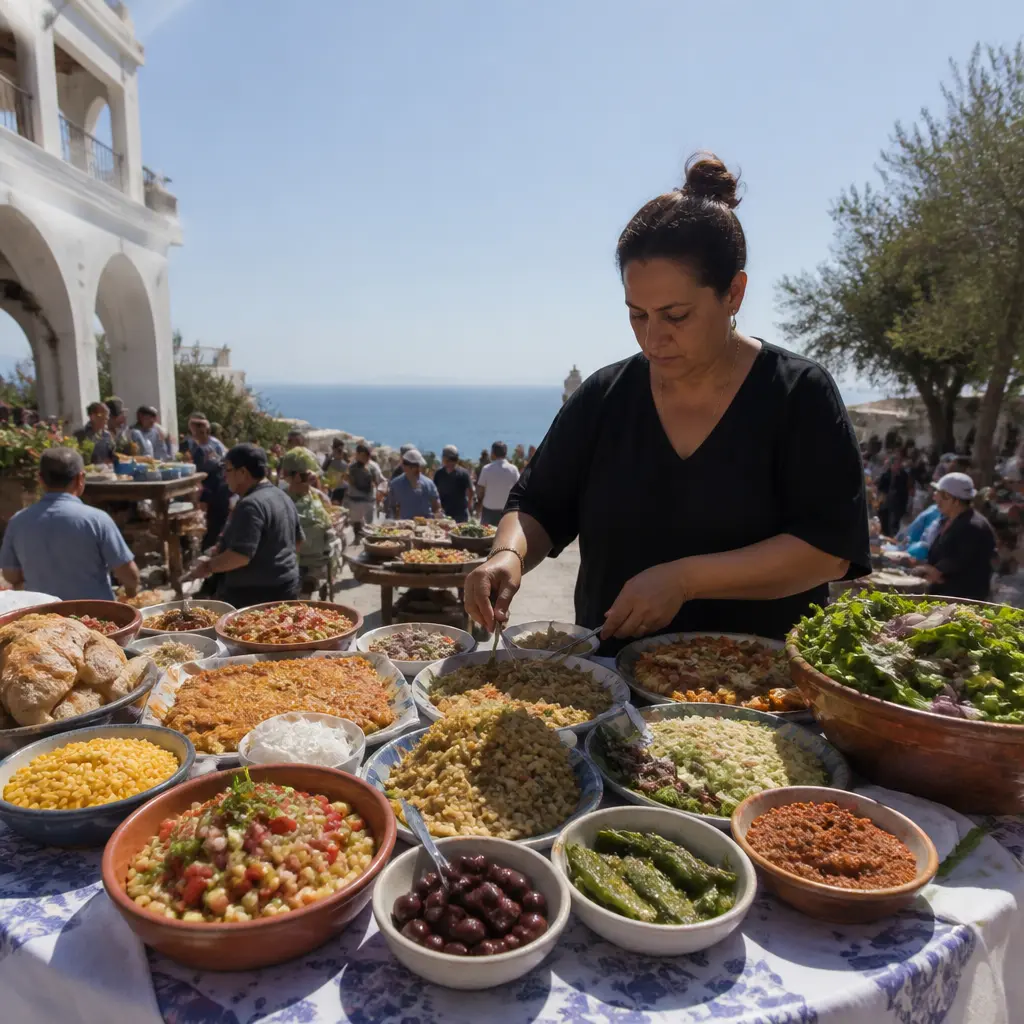
The eastern Mediterranean includes Greece, Cyprus, Türkiye, Lebanon, Syria, Palestine, Israel, and Jordan. Here, wheat appears as pita, bulgur, freekeh, and pastries; legumes become hummus and soups; and yogurt, tahini, sumac, mint, cumin, and allspice provide distinctive flavor. The region’s dishes often emphasize assembling many small preparations at once, producing the social meal known as mezze.
Greece and Cyprus: Moussaka, Horiatiki, and Halloumi
Moussaka is a baked dish commonly made with eggplant, minced meat, tomato, and a creamy béchamel topping, although regional versions use potatoes or zucchini. Its layered structure resembles other eastern Mediterranean casseroles while reflecting Greek adaptations of eggplant, dairy, and meat.
Horiatiki, often called Greek salad outside Greece, combines tomato, cucumber, onion, olives, feta, and olive oil without a lettuce base in its most recognizable form. Cyprus contributes halloumi, a firm brined cheese traditionally made from sheep’s or goat’s milk, often grilled or fried because of its high melting resistance. The European Commission recognizes halloumi as a protected designation of origin, linking the product to Cypriot production methods and geography.
Türkiye: Kebabs, Meze, and Mantı
Türkiye’s Mediterranean foodways include kebabs, stuffed vegetables, meze, flatbreads, and seafood. Adana kebab uses seasoned minced meat shaped around a skewer and grilled over charcoal, while şiş kebab uses marinated pieces of meat. The broader kebab family illustrates how fire, skewers, and spice create distinct local forms rather than one uniform dish.
Mantı, small filled dumplings served with yogurt, garlic, and spiced butter or oil, connects Anatolia with Central Asian and wider Eurasian dumpling traditions. Meze, meanwhile, turns a meal into a sequence of shared plates including eggplant salads, stuffed vine leaves, yogurt preparations, and seafood. This format reinforces the Mediterranean attribute of eating as a social activity rather than a solitary nutritional transaction.
The Levant: Hummus, Falafel, and Kibbeh
Hummus is a purée of chickpeas and tahini seasoned with lemon and garlic. Falafel consists of seasoned ground legumes, usually chickpeas, fava beans, or both, shaped and fried. Kibbeh combines bulgur with minced meat or vegetarian fillings and may be shaped into shells, patties, or layered bakes. These dishes share a reliance on affordable grains and legumes, making them both nutritionally substantial and adaptable.
The Levantine table also includes tabbouleh, fattoush, stuffed vine leaves, and manakish. Their ingredients reveal a cuisine built around herbs, sour flavors, toasted bread, and fresh produce. Because these dishes are claimed, adapted, and named differently across communities, they also show that culinary identity can be shared, contested, and continuously reinterpreted.
North African Dishes Combine Grain Cookery with Layered Spice
North African Mediterranean cuisine includes Morocco, Algeria, Tunisia, Libya, and Egypt. It draws on Amazigh, Arab, Andalusian, Ottoman, Jewish, sub-Saharan African, and Mediterranean influences. Couscous, semolina, chickpeas, preserved lemons, olives, dates, seafood, lamb, and spice mixtures are recurring elements, but each country and locality gives them a particular form.
Morocco: Couscous and Tagine
Couscous is steamed semolina traditionally served with vegetables, chickpeas, and meat or fish. UNESCO inscribed the knowledge and practices connected with couscous on its Representative List of the Intangible Cultural Heritage of Humanity in 2020, recognizing Algeria, Mauritania, Morocco, and Tunisia together. The listing is important because it treats couscous as a social practice involving cultivation, preparation, and family transmission.
Tagine refers both to a conical cooking vessel and to dishes slowly prepared in it. Lamb with prunes, chicken with preserved lemon and olives, and vegetable tagines show how gentle steaming preserves moisture while spice, fruit, and acidity create balance. Ras el hanout, cumin, ginger, cinnamon, saffron, and paprika may appear in different combinations, demonstrating that North African spice use is layered rather than uniformly hot.
Tunisia and Egypt: Harissa, Shakshuka, and Koshari
Tunisian cuisine is associated with harissa, a chili paste blended with garlic, caraway, coriander, and oil. It seasons couscous, soups, grilled fish, and sandwiches, giving the food a concentrated aromatic heat. Shakshuka, eggs poached in a sauce of tomatoes, peppers, onions, and spices, appears across North Africa and the eastern Mediterranean, with local variations in seasoning and serving style.
Egypt’s koshari combines rice, lentils, pasta, chickpeas, fried onions, and spiced tomato sauce. It is an especially clear example of urban, inexpensive, cross-cultural food: ingredients associated with different culinary histories are layered into one filling dish. Koshari also demonstrates that Mediterranean food identity includes street food and working-class cuisine, not only restaurant specialties or ceremonial dishes.
Island Cuisines Preserve Distinctive Mediterranean Hyponyms
Malta: Pastizzi and Fenkata
Malta’s cuisine reflects Sicilian, North African, British, and broader Mediterranean influences. Pastizzi are flaky pastries filled most commonly with ricotta or seasoned pea purée. Fenkata, a traditional rabbit meal, is associated with stewed or fried rabbit served with potatoes, vegetables, or pasta. These dishes show how a small island can preserve a distinctive culinary vocabulary while remaining open to maritime exchange.
Sardinia and Sicily: Pane Carasau and Pasta alla Norma
Sardinia’s pane carasau is an exceptionally thin, crisp flatbread developed for pastoral life because it stores well and can be softened with water or broth. Sicily’s pasta alla Norma combines pasta, tomato, fried eggplant, basil, and salted ricotta. Both dishes turn a small number of durable or seasonal ingredients into strongly regional foods, illustrating how island cuisines often prioritize preservation and portability.
Sustainability Gives Traditional Mediterranean Dishes Modern Relevance
Traditional Mediterranean dishes remain relevant because they often use pulses, grains, vegetables, and locally available seafood more extensively than meat-heavy diets. The EAT-Lancet Commission has identified dietary patterns rich in plant foods and lower in environmentally intensive animal products as important to healthier and more sustainable food systems. Traditional recipes are not automatically sustainable, however: overfishing, water scarcity, soil degradation, food waste, and tourism-driven demand can undermine the ecosystems that support them.
The Mediterranean basin is also one of the world’s climate-vulnerable regions. The Intergovernmental Panel on Climate Change reports increasing heat, drought risk, wildfire exposure, and water stress across the Mediterranean area. These pressures affect olives, grapes, wheat, fisheries, and vegetables. Supporting drought-tolerant crops, small-scale fisheries, heritage seed varieties, and shorter supply chains can help preserve both biodiversity and culinary traditions.
A useful way to visualize the relationship is a three-column chart: “dish,” “ecological practice,” and “cultural function.” Couscous corresponds to semolina processing, family preparation, and shared meals; brudet to mixed-catch cooking, coastal fishing, and communal dining; ribollita to leftover management, vegetable farming, and household thrift. Such a chart makes clear that a classic dish is not merely a flavor profile—it is a record of how people use landscapes and organize social life.
Conclusion: Classic Dishes Map a Shared but Diverse Sea
The entity-attribute pairing “Mediterranean cuisine—regional identity” explains why the region’s food can be recognized as a connected tradition without being treated as a single standardized cuisine. Western Mediterranean dishes such as paella, bouillabaisse, ratatouille, pasta, and pizza emphasize rice, seafood, vegetables, and wheat. Adriatic and Balkan foods such as brudet, peka, byrek, and tavë kosi preserve coastal, pastoral, and communal practices. Eastern Mediterranean dishes such as moussaka, hummus, kebabs, and mezze unite grains, legumes, dairy, herbs, and spice. North African foods such as couscous, tagines, harissa, shakshuka, and koshari demonstrate the power of semolina, pulses, preserved ingredients, and layered seasoning.
These dishes matter because they connect nutrition, history, biodiversity, migration, and hospitality. UNESCO’s recognition of the Mediterranean diet and couscous confirms that culinary heritage includes knowledge and social practice as much as recipes. Readers can deepen their understanding by comparing regional cookbooks, visiting local markets, learning the history of an ingredient such as olive oil or wheat, and supporting producers who protect traditional varieties and sustainable fishing practices.
Sources: UNESCO, Mediterranean Diet, https://ich.unesco.org/en/RL/mediterranean-diet-00884; UNESCO, Knowledge, Know-how and Practices Pertaining to the Production and Consumption of Couscous, https://ich.unesco.org/en/RL/knowledge-know-how-and-practices-pertaining-to-the-production-and-consumption-of-couscous-01602; United Nations Environment Programme Mediterranean Action Plan, Mediterranean Strategy for Sustainable Development, https://www.unep.org/unepmap/what-we-do/mediterranean-strategy-sustainable-development; Food and Agriculture Organization of the United Nations, Sustainable Healthy Diets—Guiding Principles, https://www.fao.org/3/ca6640en/ca6640en.pdf; Estruch et al., “Primary Prevention of Cardiovascular Disease with a Mediterranean Diet,” New England Journal of Medicine, https://www.nejm.org/doi/full/10.1056/NEJMoa1200303; European Commission, Halloumi/Hellim Protected Designation of Origin, https://agriculture.ec.europa.eu/farming/geographical-indications-and-quality-schemes/geographical-indications-food-and-drinks/halloumihellim-pdo_en; Intergovernmental Panel on Climate Change, Climate Change 2022: Impacts, Adaptation and Vulnerability, https://www.ipcc.ch/report/ar6/wg2/; EAT-Lancet Commission, Food in the Anthropocene, https://eatforum.org/eat-lancet-commission/.