
Grilled dishes are foods cooked over direct or indirect heat, while regional twists are the local ingredients, techniques, seasonings, and serving customs that give the same basic method a distinct identity. From Japanese yakitori and Korean galbi to Argentine asado, Jamaican jerk, South African braai, and Peruvian anticuchos, regional variation keeps grilling culturally recognizable yet constantly renewed. This matters commercially as well as gastronomically: the World Health Organization estimates that contaminated food causes about 600 million illnesses and 420,000 deaths worldwide each year, making temperature control essential, while the U.S. Department of Agriculture confirms that safe internal temperatures allow cooks to explore bold marinades and cooking styles without sacrificing food safety.
Regional Variation Defines Grilled Dishes
Regional variation in grilled dishes means adapting a shared cooking process to a place’s climate, agriculture, trade history, fuel sources, religious practices, and social customs. The Smithsonian Center for Folklife and Cultural Heritage describes foodways as the cultural practices surrounding the production, preparation, presentation, and consumption of food. Applied to grilling, that definition includes more than a recipe: it covers the cut of meat, the type of fire, the timing of seasoning, the tools used, and the way people gather around the finished food.
The main hyponyms of this pairing include skewered grilling, flat-griddle grilling, pit cooking, smoke-assisted barbecue, plancha cooking, and communal open-fire roasting. These forms overlap, but each creates a different relationship between heat and food. A thin yakitori skewer cooks quickly over charcoal, whereas an Argentine asado uses larger cuts and controlled embers; Korean galbi depends on thin marinated slices, while South African braai emphasizes live coals and social sharing.
Ingredients Turn Geography Into Flavor
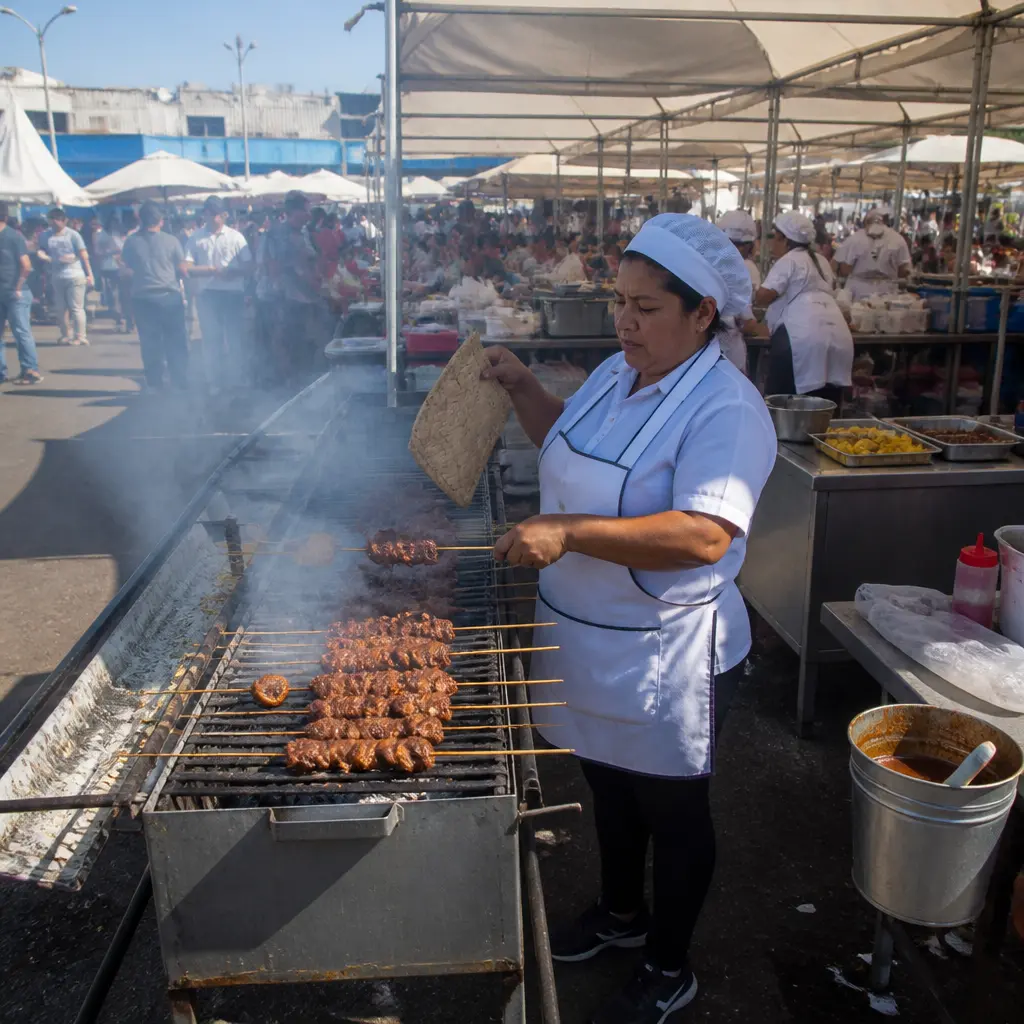
Regional ingredients are the most visible expression of place in a grilled dish. Chili peppers, citrus, alliums, fermented sauces, herbs, fruit, and local fats alter the aroma and balance of food before it reaches the fire. In Peru, anticuchos traditionally use aji-based marinades and beef heart; in Jamaica, jerk seasoning combines allspice and Scotch bonnet peppers with aromatics; in Southeast Asia, satay commonly pairs skewered meat with a sweet-savory marinade and peanut sauce.
These ingredients also demonstrate how trade and migration reshape culinary identity. Chili peppers originated in the Americas but became central to cuisines across Asia and Africa after the Columbian Exchange. Soy sauce and miso give Japanese and Korean grilling deep umami, while olive oil, oregano, and lemon connect many Mediterranean preparations. The Food and Agriculture Organization emphasizes that food biodiversity supports resilient food systems; using regional produce and varied proteins can therefore make grilling more seasonally responsive as well as more distinctive.
Marinades, Rubs, and Sauces Build Layered Taste
A marinade is a seasoned liquid used before cooking, a rub is a dry mixture applied to the surface, and a finishing sauce is added during or after grilling. Their timing produces different results. Acidic ingredients such as vinegar or citrus can brighten flavor, but prolonged exposure may soften the surface of delicate foods. Salt seasons more deeply over time, while sugar encourages browning but can burn over intense direct heat.
Regional grilling traditions use this timing strategically. Korean bulgogi and galbi marinades combine soy sauce, sweetness, aromatics, and fruit; American barbecue often separates a dry rub from a long cooking period and a finishing sauce; Argentine chimichurri is generally served alongside or after grilled meat so its fresh herbs and acidity remain vivid. This separation of stages lets cooks refresh a familiar dish without changing the core cooking method.
Fire and Technique Adapt Grilled Dishes to Place
Fire technique is the operational attribute of regional grilling. It describes how fuel, distance, airflow, heat intensity, smoke, and turning are managed. Charcoal, hardwood, gas, and electric heat do not produce identical results: charcoal and wood contribute smoke and radiant heat, while gas and electric equipment offer more precise control. The National Fire Protection Association treats grills as a meaningful household fire-safety concern, reinforcing the need to match regional technique with modern ventilation and equipment practices.
Direct Heat Creates Speed and Surface Browning
Direct grilling places food above the heat source and is best suited to smaller or thinner items that cook quickly. Skewered chicken in yakitori, lamb souvlaki, Mexican carne asada, and vegetables such as peppers or zucchini all benefit from rapid browning. The high surface temperature encourages the Maillard reaction, the set of chemical reactions responsible for many roasted, savory aromas.
The technique also demands attention. Thin cuts can move from browned to burned quickly, particularly when a marinade contains honey, sugar, or fruit. Rotating skewers, creating cooler zones, and applying sweet glazes late in the process help preserve regional flavor while reducing scorching.
Indirect Heat and Smoke Add Time
Indirect grilling places food beside rather than directly above the primary heat source. It is related to barbecue and is useful for whole chickens, thick roasts, ribs, and other foods that need longer cooking. Smoke-assisted methods distinguish Texas-style brisket, Caribbean pit cooking, and some North American barbecue traditions from quick kebabs or steaks.
The contrast between direct and indirect heat explains why “grilled” does not describe a single flavor. A fast charcoal skewer emphasizes char and texture; a slow smoked shoulder emphasizes tenderness and aroma. A useful comparison chart would plot cooking time on the horizontal axis and smoke exposure on the vertical axis, placing yakitori near short cooking and low exposure, and brisket near long cooking and high exposure.
Social Ritual Keeps Regional Grilling Relevant
Grilling is often a social system as much as a cooking technique. In Argentina, the asador manages the fire and the sequence of meats; in South Africa, braai culture centers on gathering around the coals; in Korea, diners commonly cook and share meat at the table; and in Japan, yakitori counters make small portions part of an informal communal meal. These rituals create a sense of occasion that restaurants and home cooks can adapt without copying every traditional detail.
Communal Service Encourages Variety
Communal service allows one grill to support multiple textures, flavors, and dietary preferences. A contemporary spread might combine grilled corn with Mexican-style chile and lime, skewered vegetables with Middle Eastern herbs, seafood with Mediterranean citrus, and meat with a South American herb sauce. Offering several small preparations makes regional contrast easier to taste and reduces dependence on a single large protein.
This format also supports menu innovation. The National Restaurant Association regularly identifies global flavors, value, and customization as important restaurant considerations. Regional grilling responds to those pressures because the base method is familiar, while sauces, toppings, cuts, and side dishes can change seasonally or according to local demand.
Seasonality Connects Tradition and Sustainability
Seasonal grilling uses ingredients when they are freshest and most abundant, often shortening preparation and reducing the need for heavily processed sauces. Vegetables, mushrooms, legumes formed into patties, fish, and smaller portions of meat can all take advantage of the grill. The United Nations Environment Programme reports that food loss and waste remain substantial across the food system, so planning portions and reusing grilled ingredients in salads, wraps, or grain bowls can improve kitchen efficiency.
Sustainability should not be reduced to fuel choice alone. The full impact depends on the protein, supply chain, portion size, energy source, and amount wasted. A regional twist is most responsible when it respects the original food tradition, uses available ingredients thoughtfully, and avoids treating cultural flavors as decorative add-ons detached from their history.
Food Safety Protects the Future of Grilled Dishes
Safe grilling means controlling cross-contamination, cooking food to an appropriate internal temperature, and keeping perishable items out of the temperature danger zone. The USDA recommends 145°F for whole cuts of beef, pork, lamb, and veal with a rest period; 160°F for ground meats; and 165°F for poultry. A food thermometer is more reliable than color, grill marks, or elapsed time.
Regional techniques can be preserved while safety practices are modernized. Cooks can use separate utensils for raw and cooked foods, reserve a portion of marinade before it touches raw meat, refrigerate ingredients during marination, and move food to a cooler section of the grill if the surface browns too quickly. These measures are especially important for communal meals, where large batches may sit outdoors for extended periods.
Conclusion: Regional Twists Keep Grilled Dishes Moving
Regional variation gives grilled dishes their lasting flexibility. Ingredients translate geography into flavor, marinades and sauces create layered taste, fire management changes texture and aroma, and social rituals turn cooking into a shared experience. Yakitori, anticuchos, galbi, jerk, asado, braai, satay, and barbecue are not interchangeable, but together they show how one cooking method can express many histories.
The broader lesson is that freshness comes from adaptation rather than novelty for its own sake. Home cooks and food businesses can study the origins of a regional dish, use authentic techniques respectfully, select seasonal ingredients, and apply current food-safety standards. Start by comparing two traditions on the same ingredient—such as chicken, corn, or mushrooms—and document how the fuel, marinade, cooking time, and serving style change the result.
Sources: World Health Organization, Food Safety, https://www.who.int/news-room/fact-sheets/detail/food-safety; U.S. Department of Agriculture Food Safety and Inspection Service, Safe Minimum Internal Temperature Chart, https://www.fsis.usda.gov/food-safety/safe-food-handling-and-preparation/food-safety-basics/safe-temperature-chart; Smithsonian Center for Folklife and Cultural Heritage, Foodways, https://folklife.si.edu/magazine/foodways; Food and Agriculture Organization of the United Nations, The State of the World’s Biodiversity for Food and Agriculture, https://www.fao.org/3/CA3129EN/CA3129EN.pdf; National Fire Protection Association, Grilling Safety, https://www.nfpa.org/education-and-research/home-fire-safety/grilling; National Restaurant Association, What’s Hot Culinary Forecast, https://restaurant.org/research-and-media/research/research-reports/whats-hot-culinary-forecast/; United Nations Environment Programme, Food Waste Index Report 2024, https://www.unep.org/resources/publication/food-waste-index-report-2024.